Foreknowledge Tropes – The Epicurean Cure A celebration of thinking – rigorously, critically, and enthusiastically – about and through the media we love. 2017-08-11T21:22:29Z https://www.epicureancure.com/feed/atom/ WordPress The Master https://twitter.com/dwselfe <![CDATA[Rainbow Rowell, Carry On: The Rise and Fall of Simon Snow]]> https://www.epicureancure.com/?p=506 2017-08-11T21:22:29Z 2017-08-09T17:11:40Z Heavy spoiler alert! If you haven’t read Carry On, desperately want to, and read this review first, you really only have yourself to blame for what happens next.

The highest compliment I can pay Carry On, my George Cross or Légion d'honneur, is that my childhood (a somewhat more distant realm than I’m currently prepared to recognise) would have been immeasurably improved by its presence. Fantastically well-written and edited, Rowell’s prose is hypnotising – such that it renders a dissolution of borders between the reader and the world she offers, an amorphous state interrupted only by the end of a chapter or being twatted by one’s hungry cat.

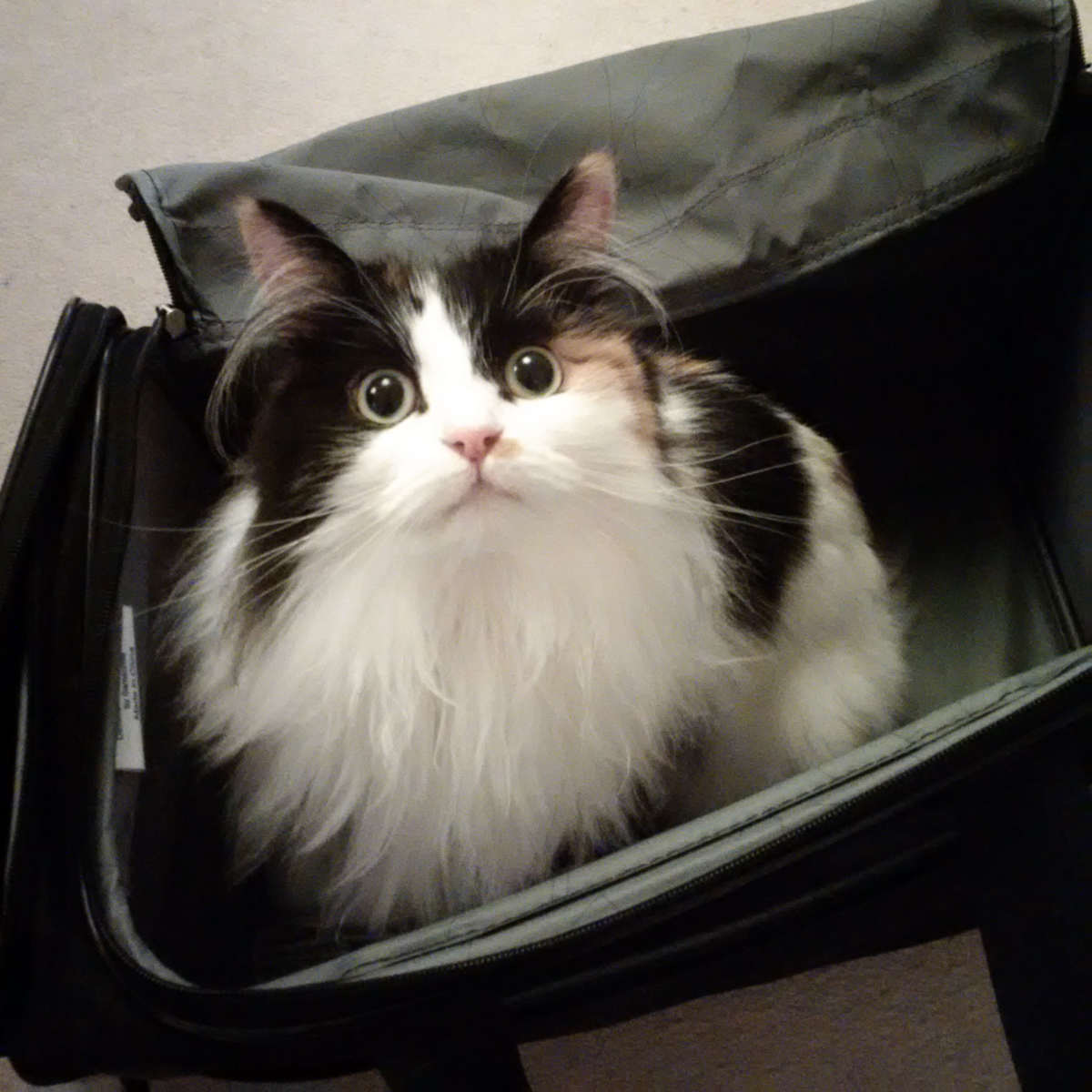
A cute little cat stares up at the reader.

Of course, the premier pleasure of this novel is the burgeoning romance between the eponymous character and his arch-nemesis, Tyrannus ‘Baz’ Basilton Grimm-Pitch: paced with exquisite insufficiency, each encounter (or collision) between them nuanced and wonderfully imprecise, it is, without doubt, one of the most enjoyable and – crucially – satisfying same-sex relationships in literature I’ve encountered.

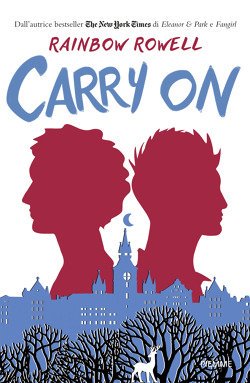
The Italian cover of Carry On.

Of course, I could fanboy with abandon for the rest of this review but, alas, time isn’t as charitable as it used to be: places to avoid, colleagues to undermine, you understand. Instead, I’d like to draw your attention to two points that most captured my attention. Firstly, Rowell’s magic-system: it’s unlike any other I’ve encountered in fantasy literature (although I’m sure comparable systems exist and no doubt you’ll haughtily helpfully remind me of that fact via email or twitter).

I’ll be frank: Rowell’s magic-system gies me the thirst. A philologist’s wet-dream, it’s developed around the principles of language change and evolution:

“Magic words are tricky,” Snow informs us,

“Sometimes to reveal something hidden, you have to use the language of the time it was stashed away. And sometimes an old phrase stops working when the rest of the world is sick of saying it.”

Rowell’s magic-system: it’s unlike any other I’ve encountered in fantasy literature.

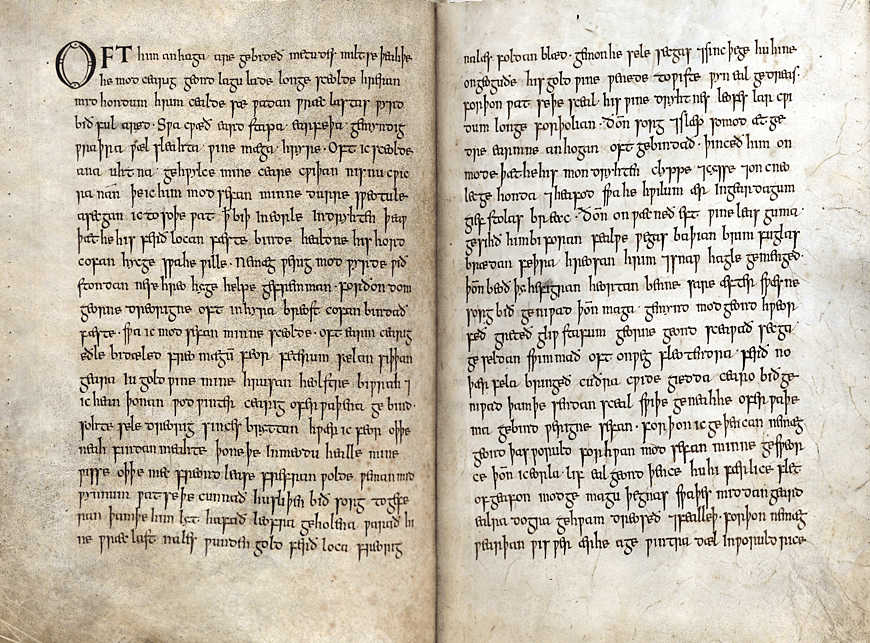
Isn’t that fascinating? I suppose we might think of a word like goldwine – often translated as the Old English term for Lord – it means ‘gold friend’: a kenning, or compound expression, that was deployed specifically to reference a generous leader. For example, in the poem Beowulf, the eponymous hero is referred to as goldwine G__ēata – the gold friend of the Geats; and Hrothgar, king of the Danes, is described as goldwine gumena – gold friend of warriors.

A screenshot of The Wanderer, as viewed in the Exeter Book manuscript.

In the Anglo-Saxon poem, The Wanderer, the narrator ruminates on his past happiness in service, feasting with his comrades and enjoying the generosity of his lord, all now dead:

siÞÞan geara iu / goldwine minne / hrusan heolstre biwrah

Since long years ago / I hid my lord / in the darkness of the earth.

Spells, like language itself, lose efficacy with popular decline but regain a measure of value when historically contextualised (perhaps the modern incarnation of goldwine, having been processed through some considerable semantic shift, might be toryprick?). “The best new spells are practical and enduring,” explains Penelope, Snow’s formidable BFF:

“Catchphrases are usually crap; mundane people get tired of saying them, then move on. (Spells go bad that way, expire just as we get the hang of them.) Songs are dicey for the same reason.”

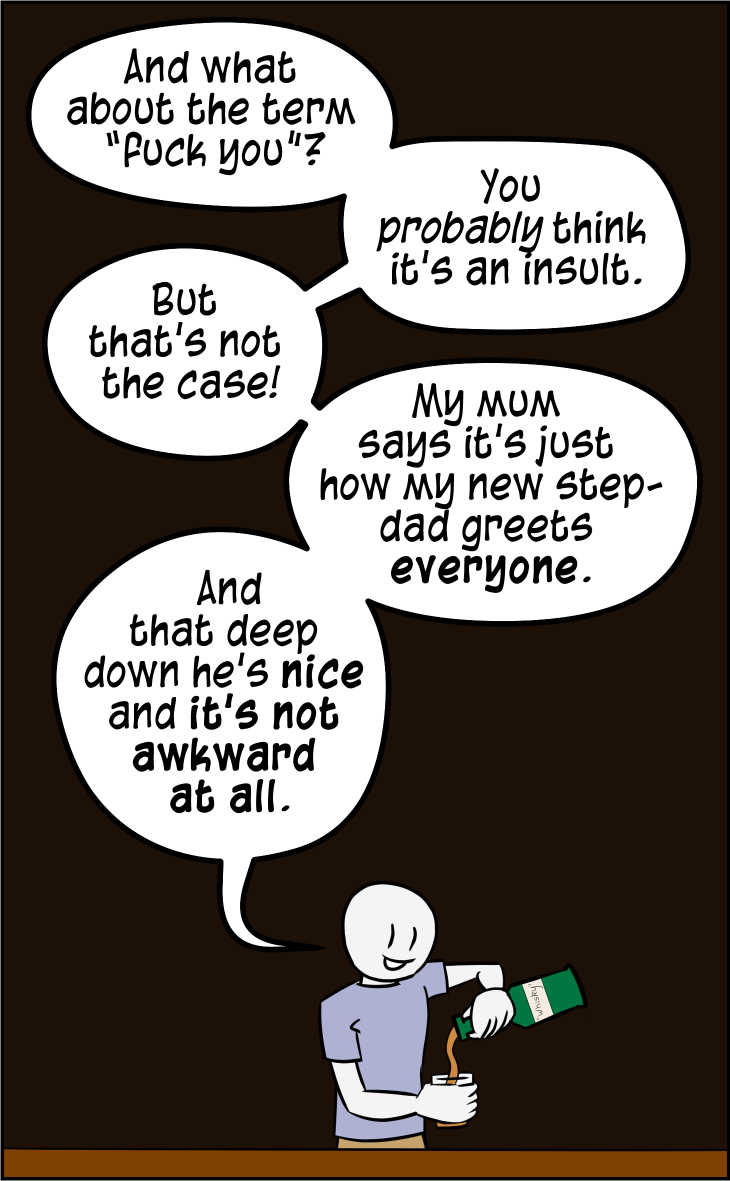
What makes the magic-system in Carry On especially charming is the arresting tension between descriptivist and prescriptivist thought extant along the demarcations of institutional attitudes and broader society. On the one hand, as Penelope mentions, spells develop, change and die with use (or lack thereof) – we might consider, as an illustration of this process, the word nice. A French loanword into Middle English (around the 14th Century), it has throughout its history meant (sometimes concurrently): foolish, stupid, ignorant, lascivious, wicked, extravagantly dressed, scrupulous or punctilious (in terms of reputation or conduct), fastidious or fussy, careful, strict, refined or cultured, discerning in terms of literary taste, virtuous, conversationally appropriate, timorous or cowardly, lazy or slothful, pampered or luxurious, strange or rare, shy or coy (affectedly so), requiring close consideration, subtle or exact, slender or thin, trivial, meticulous, tastefully discriminating, dextrous, doubtful, requiring careful handling, restorative, satisfactory, pleasant-natured. See the OED entry for the full extent of the wild ride that is nice.

A comic observing a particular deployment of the term ‘nice’.

Now, of course, it seems to be undergoing pejoration – one tends to use it ironically. If we describe something as ‘nice’, it’s code for ‘tolerably shit’. For example:

Me: Oh hey, Barbara – Timmy’s such a nice kid. I’d be happy to look after him more often.

Me to self: Infant mortality, don’t fail me now.

On the other hand, Simon describes ‘elocution’ lessons students undergo to correctly execute spells:

Words are very powerful,” Miss Possibelf said during our first Magic Words lesson. No one else was paying attention; she wasn’t saying anything they didn’t already know. But I was trying to commit it all to memory. “And they become more powerful,” she went on, “the more that they’re said, and read, and written, in specific, consistent combinations.”

Spells, like language itself, lose efficacy with popular decline but regain a measure of value when historically contextualised.

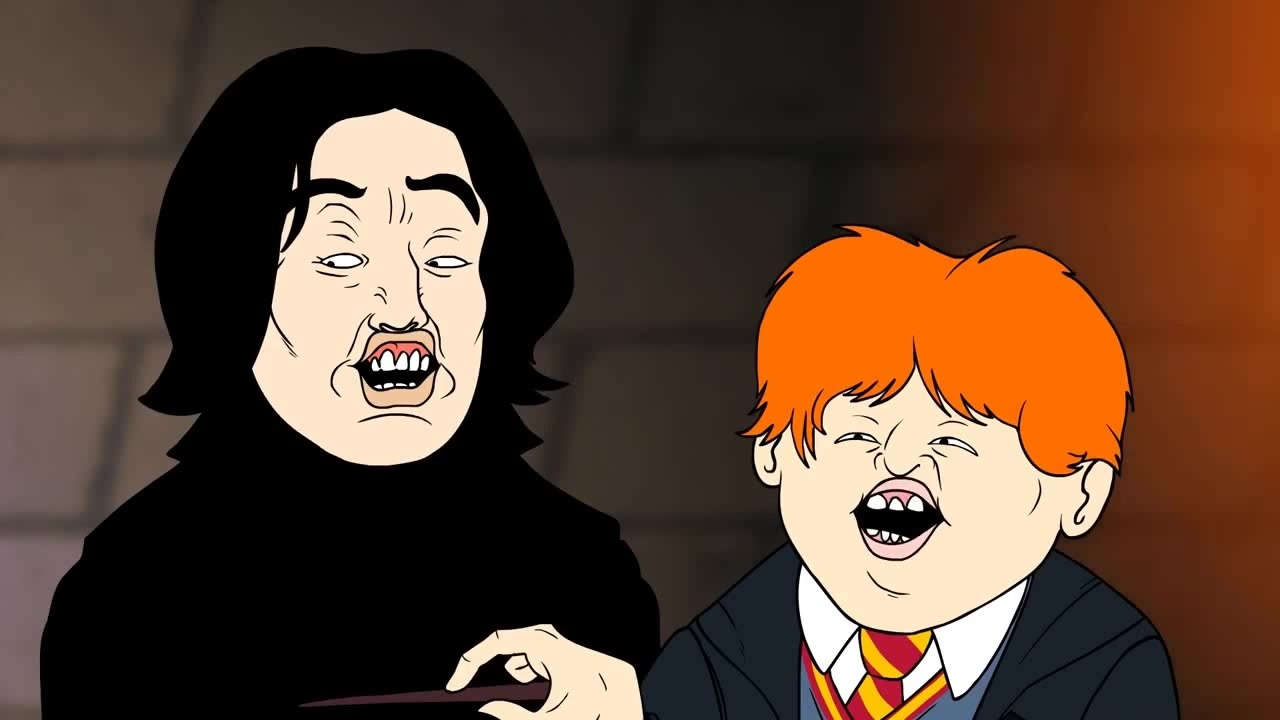
“…speaking out, hitting consonants, projection” – even amidst the acknowledgement of linguistic change and development, there’s a need to fix, to attach ‘correctness’. Rowell’s magical system is a superbly-apt, and self-aware, paradigm for the struggles between prescriptivist and descriptivist attitudes to language, between conservative and transformation, stasis and flux. There seemed to be the inkling of a comparable approach emerging in The Philosopher’s Stone (recall the “It’s levi-o-saa” incident between Hermione and Ron) but that somewhat degenerated into a system of ‘this sounds Latiney enough, right? Cool. Boom. Magic’, ignoring the issue of prescriptivism altogether.

Snape and Ron pronouncing the spell ‘Wingardiam Leviosa’.

The second point that struck me in the novel was Rowell's handling of the ‘Chosen One’ trope. Carry On is often regarded as an ode to fanfiction, being as it is something of a Harry Potter pastiche. This wasn’t the case for me: I read Carry On as a response to the failings of Harry Potter (cue a thousand screaming Potterites jamming the postal system with envelopes of dog-shit destined for my door).[1] For example, the inescapable fact that Harry Potter was based in an exclusively heteronormative universe. “But Dumbledore was gay!”, I hear you whine. No – if it wasn’t clear in the books, it’s not the case. I’m intractable on this point.

Rowell creates a world where not only can gay people do magic (which should be obvious to everyone – Scottish gays historically rode unicorns into battle), they can even be the protagonists.

Even if we were to accept the tiny homo-crumb Rowling flicks to us (after her books are published), Rowell creates a world where not only can gay people do magic (which should be obvious to everyone – Scottish gays historically rode unicorns into battle), they can even be the protagonists. As such, Rowell takes Rowling’s tried-and-tested ‘Chosen One’ narrative wherein the hero of the story is predestined for great things (by, you guessed it, a prophecy!) and subverts it beautifully. Simon is bio-magically conceived for the sole purpose of fulfilling a prophecy that, as it turns out, was misread, resulting in a hero attempting to fulfil an ill-fitting destiny as best he can. All the while, the true subject of the prophecy, Ebb, happily tends her goats throughout, having opted-out of the system despite her supreme gift for magic. So subversive is Rowell’s treatment of, and so conditioned am I by, the established framework for the ‘Chosen One’ trope, I found myself suffering incredible frustration during my first reading. Only several completions later have I accepted the fact that Ebb isn’t going to be the magical saviour of Britain – it’s been a journey of personal development and awkward afternoon erections.

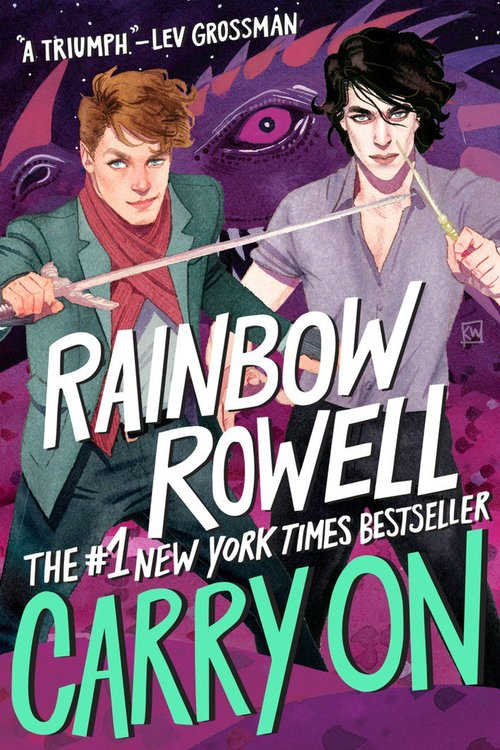
The latest cover of Carry On, featuring Simon and Baz.

Carry On is undoubtedly one of the best pieces of fiction I’ve encountered – if, like me, you’re of a certain age where you’re not old enough to recall a youth before mainstream m/m romances but not young enough to only know a youth where mainstream m/m romances exist (though still in unsatisfying numbers), Carry On feels especially important, a poignant notice of how much sweeter things could have been. Aside from Rowell’s innovative exploration of language and magic, it’s a book that features protagonists who are gay and acknowledges the attendant issues they have to face but doesn’t confine its narrative scope to those issues. It’s a book that’s technically proficient, often hilarious and always intelligent. I’m indifferent as to whether you enjoyed it but it’s important that you know it made me very happy indeed.

Footnotes

[1] Editor's note: Given that I rather like Harry Potter, and tend to check the mail, please do refrain!


Further Reading

For more on the prescriptivist/descriptivist dichotomy, see:

And, for his take on the Chosen One and Prophecy tropes, see our interview with Adrian Tchaikovsky.

]]>
0
The Doctor http://www.stephrennick.com <![CDATA[Sherlocked in Samarra]]> http://www.epicureancure.com/?p=365 2017-08-11T20:38:05Z 2017-02-14T16:58:36Z There has been a lot of talk about The Six Thatchers – opening episode of Sherlock season four: disappointment, glee, parallels drawn to a certain besuited agent with a license to kill. Gatiss even wrote a poem. But there is one part of the episode that hasn’t received attention, and it’s about time it did (never fear, I’ll avoid spoilers – at least until the end).

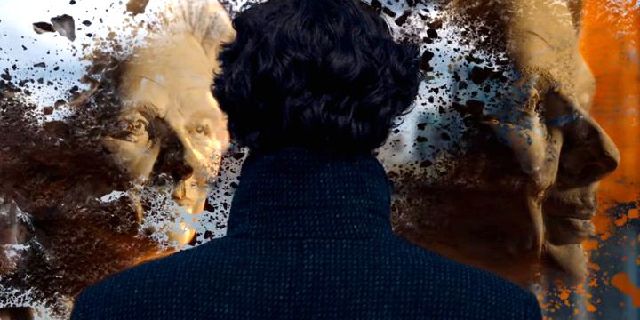
Back of Sherlock

Near the beginning of The Six Thatchers, Sherlock tells a story. It’s a retelling, in fact, of W. Somerset Maugham’s own retelling of an old Arab fable. Maugham’s version goes like this:

There was a merchant in Baghdad who sent his servant to market to buy provisions and in a little while the servant came back, white and trembling, and said, Master, just now when I was in the market-place I was jostled by a woman in the crowd and when I turned I saw it was Death that jostled me. She looked at me and made a threatening gesture; now, lend me your horse, and I will ride away from this city and avoid my fate. I will go to Samarra and there Death will not find me. The merchant lent him his horse, and the servant mounted it, and he dug his spurs in its flanks, and as fast as the horse could gallop he went. The merchant went down to the market-place and he saw me standing in the crowd, and he came to me and said, “Why did you make a threatening gesture to my servant when you saw him this morning?” “That was not a threatening gesture”, I said, “it was only a start of surprise. I was astonished to see him in Baghdad, for I had an appointment with him tonight in Samarra.”[1]

Commonly this tale is cited as an exemplar of fatalism: no matter what the servant does, it seems, death will find him. Inevitable, predestined – two words that the Holmes brothers use in their discussion of the tale. The villain of the episode references it too:

“I’m just like the merchant in the story, I thought I could out-run the inevitable. I’ve always been looking over my shoulder, always expecting to see the grim figure of… Death.”

But it’s not that the servant is doomed to be taken that evening no matter what he does; he is doomed because of what he does. He sees Death, believes he’s in trouble, and acts on that belief – his death is the result. We might think that if he had not been so certain – or if his Master had refused to lend the horse, or he’d been slower on the road – his fate may have been different.

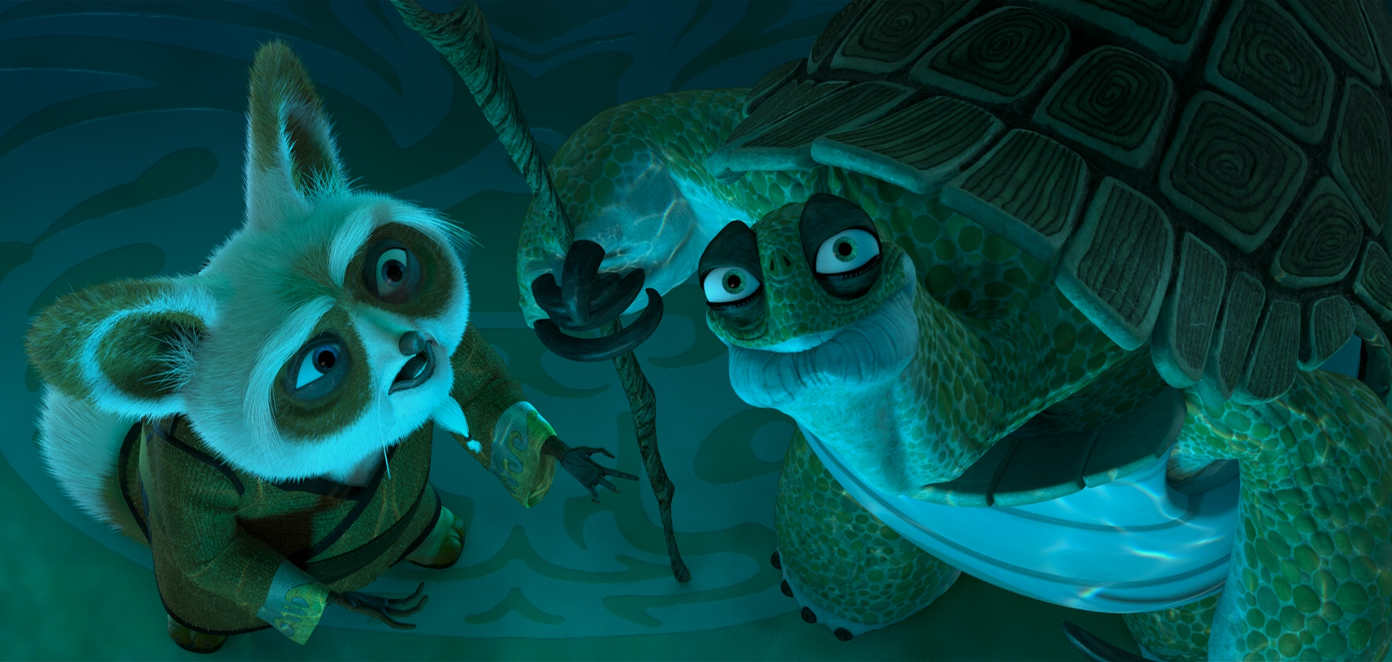
This isn’t unusual in fiction: characters giving weight to a prophecy is often what makes it come true. In Kung Fu Panda, Master Oogway has a vision in which the villainous Tai Lung escapes from his prison. To prevent the vision coming true, Shifu sends a bird to the prison to increase security, thereby providing Tai Lung with the means of escape: a feather for a lock pick. It’s not that Tai Lung’s escape was inevitable, although we might feel fatalistic were we in Shifu’s shoes (well, closed-toe sandals). (There's more to say here, but we’ll investigate other common features of self-fulfilling prophecies in a future instalment.)

Shifu and Oogway from Kung Fu Panda

Throughout The Six Thatchers we return to the story of the servant in Samarra. We learn from Mycroft that Sherlock doesn’t put much stock in the fatalistic conclusion:

M: You always hated that story as a child. Less keen on predestination back then.

S: I’m not sure I like it now.

M: You wrote your own version, as I remember. Appointment In Sumatra. The merchant goes to a different city and is perfectly fine.

S: Goodnight Mycroft.

M: Then he becomes a pirate, for some reason.

(Vague hints that might constitute a spoiler follow)

I’m on the side of young Sherlock – Samarra was a choice, not an inevitability. To deny this cheapens the very important choice made at the climax of the episode, and the character who made it, riding to Samarra with eyes wide open.

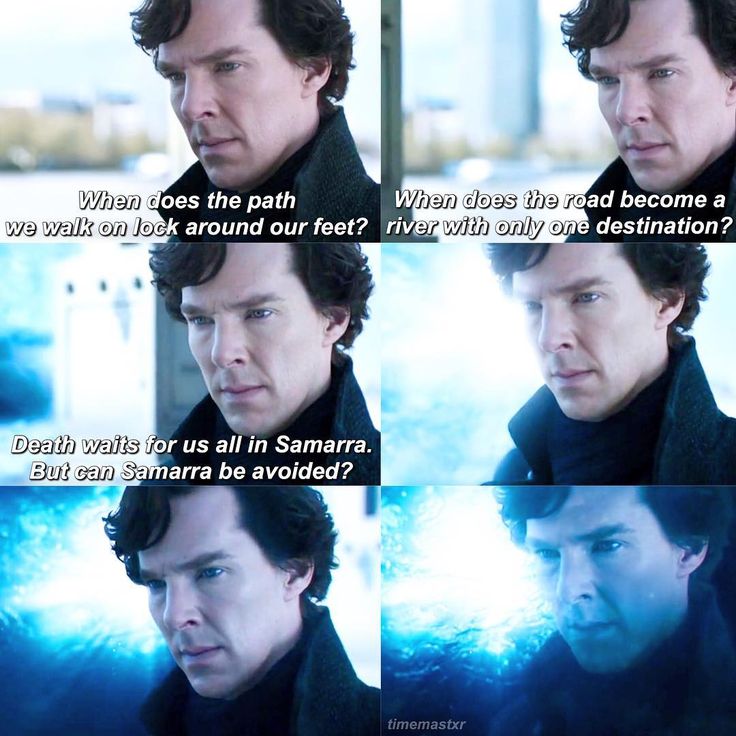
Series of screenshots from the episode, with text overlaid: When does the path we walk on lock around our feet? When does the road become a river with only one destination? Death waits for us all in Samarra, but can Samarra be avoided?

There’s a sense in which we all get to Samarra eventually, of course. But until then I’m with Rincewind from Terry Pratchett’s The Colour of Magic, who, upon being told by Death that he’s expected soon in Psephopololis, simply declines to be there:

“But that’s five hundred miles away!’

YOU DON’T HAVE TO TELL ME, THE WHOLE SYSTEM’S GOT SCREWED UP AGAIN, I CAN SEE THAT. LOOK, THERE’S NO CHANCE OF YOU-?

Rincewind backed away, hands spread protectively in front of him…

‘Not a chance!’

I COULD LEND YOU A VERY FAST HORSE.

‘No!’

IT WON’T HURT A BIT.

‘No!’ Rincewind turned and ran. Death watched him go, and shrugged bitterly.”[2]

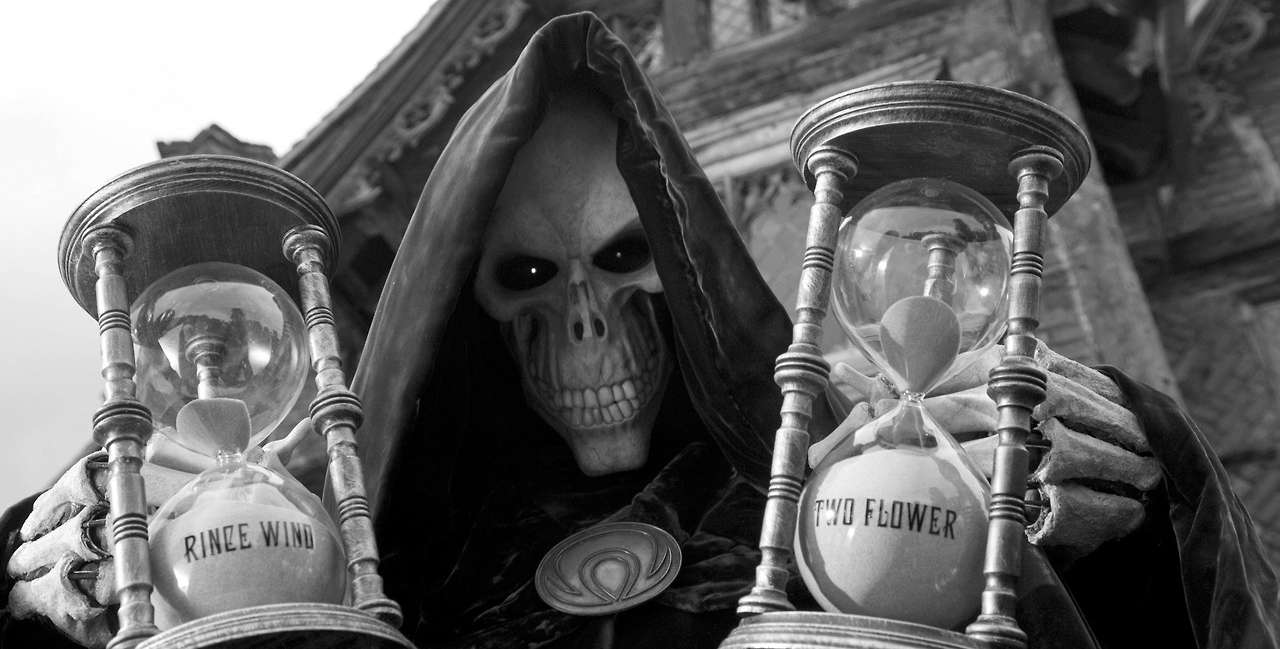
Grim Reaper from the screen adaptation of The Colour of Magic, holding two hourglasses labelled

Footnotes

[1]W. Somerset Maugham, “An Appointment in Samarra” from Sheppey (1933)

[2] Terry Pratchett, The Colour of Magic, (London: Transworld, 1983), pp. 77-78

]]>
0
The Doctor http://www.stephrennick.com <![CDATA[Adrian Tchaikovsky, On Tropes, Writing, & Children of Time]]> http://www.epicureancure.com/?p=323 2017-08-11T21:06:37Z 2016-10-16T15:23:02Z Adrian Tchaikovsky is a widely acclaimed British fantasy and science-fiction writer. His first sci-fi novel – Children of Time – was awarded the 2016 Arthur C Clarke award; he has also been nominated for the David Gemmell Legend Award and a British Fantasy Society award. Here we discuss Children of Time, tropes, genre conventions, prophecies, spiders and much more. You can keep up-to-date with Adrian's work on his site, or follow him on Twitter @aptshadow.


Spoilers: some elements of Children of Time, but no major plot spoilers.

The Doctor (TD): One of our interests at the EC is the intersection of different types of media, and I’ve heard rumours that you make use of role-playing games in your writing process?

Adrian Tchaikovsky (AT): I don’t really make use of them in my writing process, but Shadows of the Apt – my first series – is based on a role-playing game I ran in university. I’m trying to think if it goes any further than that – I think having a history of gaming has helped me inordinately as a writer for a number of reasons; and that’s probably closer to the mark.

TD: What reasons would they be? 

AT: The majority of current fantasy writers, certainly that I’ve met, seem to be gamers; and I think one of the reasons that fantasy has gone into the current territory – that is to say, it’s very morally ambiguous, there are no pure good guys or pure bad guys, and there’s a lot more focus on the internal life of the characters – is because of gaming experience. If you look at the way that traditional player characters act, and how they interact with the world, it is very similar to that: they don’t tend to be your crisp Tolkienian heroes. Also I think running games and creating campaign worlds uses a very similar skill-set to world building for a book. It teaches you to pay attention to a lot of little details you mightn’t otherwise look at.

TD: Are you still involved in role-playing games?

AT: When I get the opportunity, yes. One thing I’ve started – just this year – I’ve run a number of little, one-off games at science-fiction conventions, which has worked out very well so far.

TD: Very cool. Speaking about the shift away from Tolkien-esque good and bad, there seems to be quite a lot of focus lately – in fantasy literature especially – on trope subversion, on doing something different to how we’ve done it before. What value do you think tropes possess in the creation of these kinds of texts? Are there any that you like to use, or any that you think we should just get rid of?

AT: It’s a fluid ecology, with tropes. If anything becomes over-used, if you’re saying it over and over again in books, then certainly from my perspective that’s something you want to give a rest to. I think ‘getting rid of’ is probably fairly draconian, because if it’s been out of circulation for a while, then it’s probably about time that it can be brought back and rejuvenated. For example, the most overused tropes – you’ve got the prophecy, and the magical quest McGuffin object – obviously a lot of these come from Tolkien, and Tolkien uses them in his own inimitable way, and then a lot of other people imitate that. And so you get scores and scores of, you know, ‘this young boy is the only person who can defeat the Dark Lord and it is prophesied’, et cetera, et cetera.
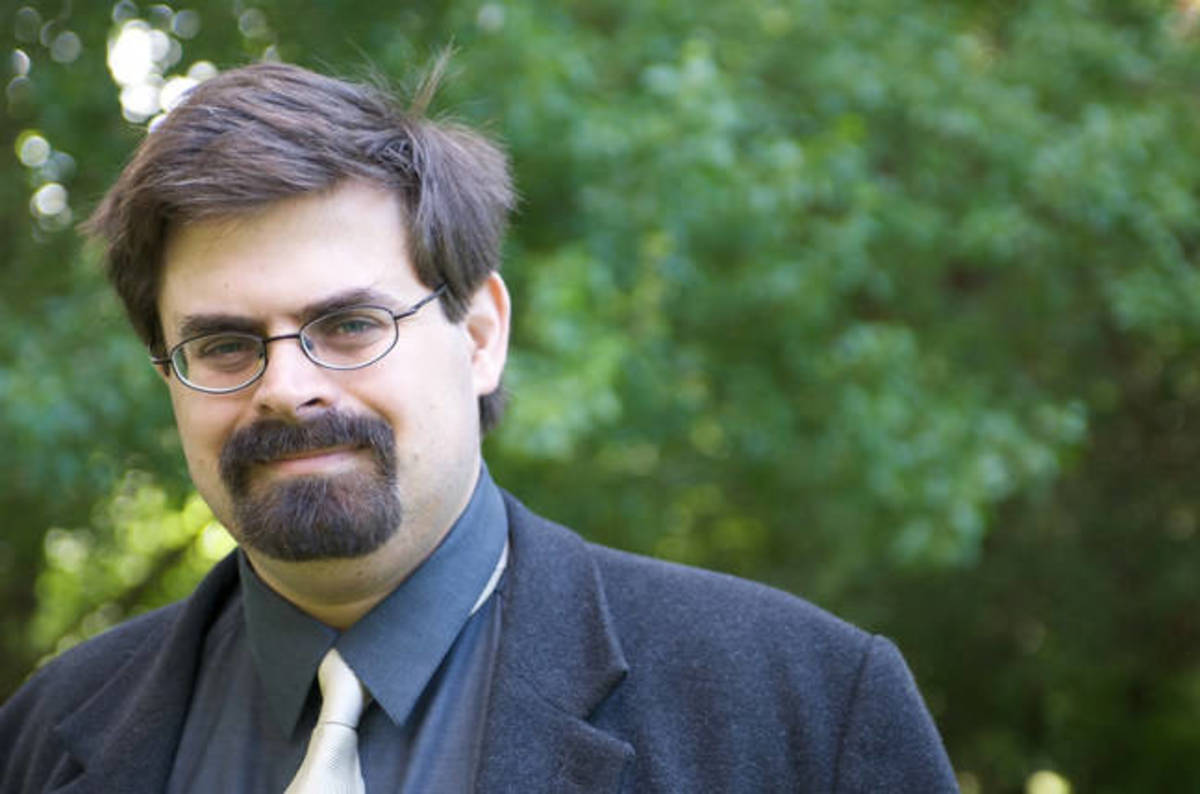
Adrian Tchaikovsky in a suit.

I prefer stories about heroes who actually earn and achieve their success, and who could theoretically have been anyone; rather than ‘everything devolves on this one person’. But obviously these are very popular things, so maybe I’m the minority with that. For me it seems to be reinforcing that ‘Divine Right of Kings’ sort of narrative which we’ve inherited from the Middle Ages, where it is only kings and princes that can achieve anything in the world, and everyone else is just an onlooker to the story of these – it’s the Great Men of History sort of thing isn’t it? Everything comes down to ‘if you’re this person, then you are allowed to do things’, and that person is almost always, of course, a man, and often of a certain social class. There are some fantasy stories where 75% of your group of heroes are all princes.

TD: Yes.

AT: [Laughs]. And that goes back to – you have the old Romance stories where everyone is a prince or a king, or at least a very high-ranking noble, and no one else is remotely important to the story.

TD: [Laughs] Which, you know, is very sad for all of us who want to be heroes of our own stories, and sadly aren’t princes.

AT: Well exactly.

It's a fluid ecology, with tropes.

TD: You mentioned prophecy there – how does prophecy feature in Spiderlight?

AT: Well Spiderlight is, and very very explicitly, a trope inversion in that sense. You have your traditional adventuring party and your traditional prophecy and as becomes apparent about midway through the book, the interpretation of the prophecy that the heroes have fixed on – that they need a giant spider to show them the way to defeat the Dark Lord – is by no means the only interpretation of the prophecy. They run into other religious sects who have a completely different view on what it actually means and, well, hilarity ensues.

I don’t want to spoil the book, so I won’t go into how all that comes out, but the nature of the prophecy as a way of driving the quest is given a fairly thorough and not particularly positive looking at.

TD: Excellent. You’ve mentioned spiders, there are also – and I don’t want to spoil anything about any of your books – but there are also some spiders in Children of Time. Why so many spiders?

AT: I used to have this very intelligent-sounding spiel about how insects and spiders were often used in literature as a mirror to the human condition, and so you’ve got Pelevin’s Life of Insects and you’ve got Metamorphosis and Capek’s Insect Play, and… it’s terribly impressive sounding, but it’s mostly bunk, because for reasons I can’t go back far enough to trace, I’ve always had a fascination with spiders and insects and things like that. I don’t have that instinctive loathing and revulsion that a lot of people seem to have. There’s – I don’t know if you know Penny Dreadful, the TV show?

TD: Yes!

AT: It’s one of the finest TV series I’ve ever seen, and it has this introductory sequence in the credits which is full of scorpions and spiders and things like that. It’s obviously intended to instil a sense of dread, and to me it’s entirely the opposite, I find it all really terribly pleasant.
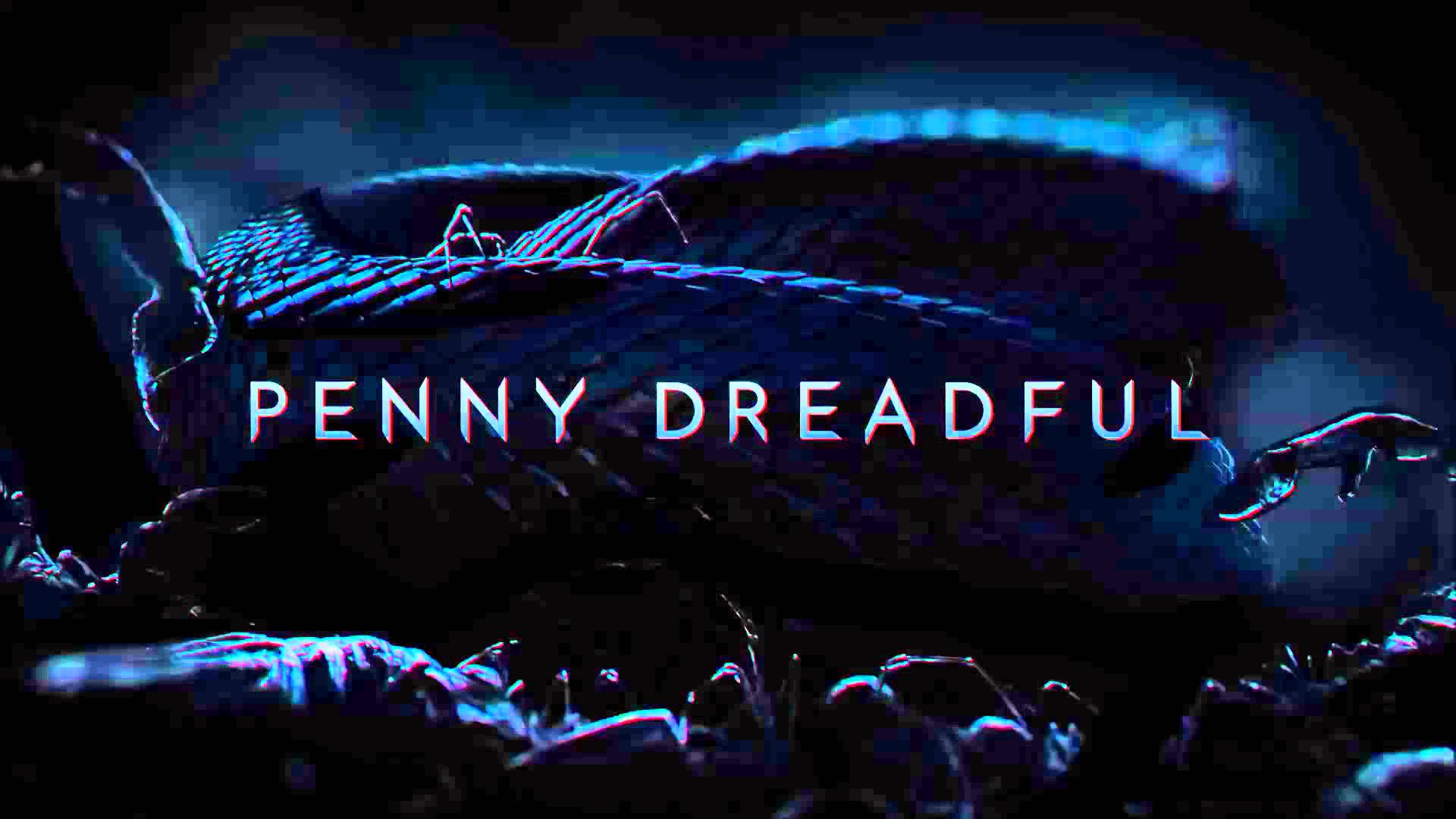
Title shot of Penny Dreadful

It’s not really a spoiler that there are spiders in Children of Time, especially for anyone who knows me and knows my work, but it is kind of an open secret now from various reviews. One of the nice things about that is – for example, one of my closest friends is quite arachnophobic, and he’s read Children of Time and was very much able to associate with the spider characters – a lot of people who don’t like spiders have said to me that it has helped them a little to see them as something other than objects of fear. Which is nice!

TD: That was certainly my experience, I mean, I must admit, I got a bit teary at the end of Children of Time,

[Adrian laughs]

TD: Which is a bit ridiculous, but you painted them as creatures of great empathy, which was a bit of a head-spin for me. Especially coming from Australia, where most of them will kill you.

AT: [Laughs heartily] Well yes, I’m used to being in the UK, where that’s…

TD: Less of an issue.

[Adrian continues laughing at TD, quite rightly]

TD: So on the spider front… now obviously I’m a philosopher, so some of the next questions are based on philosophically interesting points, and I’m interested in how they came about. So speaking of the spiders: early on in the book, on page 21, you first introduce Portia, and you say:

‘Portia has no thoughts. Her sixty thousand neurons barely form a brain…’

And then you go on to describe her using verbs we would usually associate with thought, things like recognising her enemy, playing with the edge of the web, working out and planning her approach, and I think the thing that’s most interesting for me: that she knows her enemy’s spit would prove fatal.

Do you think there’s a tension between those two ideas?

AT: There is, and effectively it’s a real world tension: it is perplexing to zoologists (in this particular case). Spiders have very little grey matter, so to speak, and yet, this particular spider’s behaviour is every bit as complex as I’ve described in that chapter. It certainly seems to us – as thinking creatures – that there is thought going on.

And yet at the same time that contradicts everything we know about the equipment required for that thought. So obviously it’s possible that the recognition I’m referring to is somehow just an extremely sophisticated kind of cause-and-effect, instinct, and in most cases it would be written off as just that. But the behaviour is so complicated and sophisticated in this case that it is extremely hard to explain, especially because there’s a lot of complex problem solving going on, for example with the spatial mapping and the object permanence issues that I brought up there.
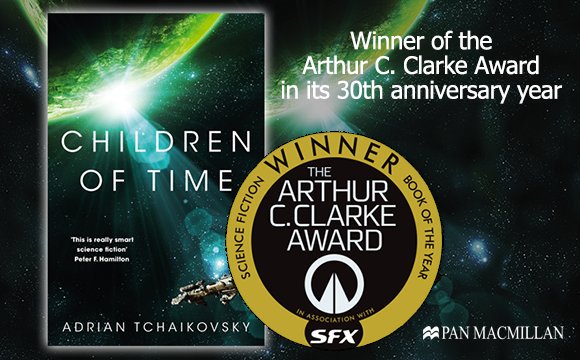
Children of Time: winner of the Arthur C Clarke award.

TD: This feeds in to a theme I noticed throughout the book – and it’s one I really like – a kind of functionalist theme: as long as something behaves in the same way or does the same thing, we should just call it by the same name. That’s what matters, not what it’s made out of. So we see that the planet’s inhabitants have organic equivalents of human tech, things like radios, and in such cases you call them by that human name – like a radio – which despite…

AT: Well, that’s actually one of the examples where it’s not an organic equivalent. Certainly what they’re doing at the beginning when they’re picking up the signal with the radio is very much like the sort of wireless set my dad used to build.

TD: Sure, I meant towards the end when [spoiler redacted]

AT: Oh yeah, sure. And elsewhere, because of their different sensorium and the different trajectory their tech takes, they end up solving problems that we would use mechanical means for by biological and biochemical means because those as the tools they have and can manipulate.

TD: So, another example then, take the consciousness of Dr Kern, whose location (or what constitutes that consciousness) changes from an organic thing to an organic + artificial thing, and then later on is more distributed. What inspires that kind of approach? What ideas do you have about the mind? Do you think she’s the same person across time? [Editor's note: in hindsight, this was a lot of questions in one breath]

AT: I think she’s not, but she doesn’t realise she’s not. The thing with Kern is, she’s got a dichotomy of identity. There’s her, and then there’s…

TD: Eliza.

AT: …which is a more true Artificial Intelligence which has semi-merged with her (at the time for a very specific purpose, but then she’s in that state way longer than was ever anticipated and so the boundaries become very indistinct). There is a thought experiment: you have the two halves of the brain, and you can – as I think was done for epilepsy at one point – sever the connection between the two halves. The thought experiment is: what if you had some sort of computer between the two halves of the brain, which effectively acted as a relay station for all the communication. And therefore, it would get all the thoughts going through both sides of the head and would be able to insert things. You as the effective owner of the brain wouldn’t realise, because all of your communications between the two hemispheres are going backwards and forwards through this relay.

Eliza is kind of in that position, and so you get that merging, until it’s not entirely clear what is originating in the brain and what is originating in Eliza. Eventually you get to the point where Kern tries to check up on Eliza and finds out that what she’s checking up on is Kern, and the thing that thinks it’s Kern is Eliza. So she’s obviously not the same, but then there are problems when she tries to access memories of who she was as well. She’s not the same, but there has been a seamless transition.

And the other thing I’m looking at there is that we have, as human beings, the incredible ability to fool ourselves and to rationalise things that have happened to us; so that whatever may have changed or been lost has effectively been smoothed away in Kern’s consciousness. Even when she is in her final form, which is radically different, and presumably offers radically different abilities, she is effectively telling herself that there is that continuity, and believing in her own narrative.

TD: I’m going to be mulling all that over, as there’s a lot there that’s really interesting. But moving on slightly, to a similar question insofar as it feeds off this changing identity business. There’s this fabulous juxtaposition in the novel between the time lapse for the humans, and the generational narrative for the planet’s inhabitants. What were you trying to achieve with that?

AT: To a certain extent it was just a plot necessity – I needed the spiders to evolve, and even with the nanovirus as a kind of McGuffin to allow that evolution to happen way faster than it actually would, it still requires the humans to be kicking their heels for a very long time. I could have conceivably had the evolution happen and then the humans arrive, but I think I gain a lot narratively from being able to link the sections in real time, rather than just having flashbacks to the evolution (which I think would have been a bit of a cumbersome device).

Originally I was going to do the whole thing with time dilation and have humans travelling at near-light speed, and unfortunately the mechanics of that and the energy required ruled it out for the sort of human civilisation I was looking at.

But I gain colossally from having at least Holston Mason coming in and out from hibernation, because you get that wonderful kind of disjointed punctuation, where everything has changed every time he comes out.

TD: Which is fabulous. One thing I really liked about it, is you’ve got the changing (this isn’t a question, this is just a comment, sorry), perspectives every chapter, and so often when you have a changing perspective in a novel you think ‘oh, I was really enjoying the previous bit, I’ll just put the book down now’, but I couldn’t do it! Every time I was really into the new story within half a page of the next chapter.

AT: Good, good.

TD: You mention the restrictions on the technology that the humans would have. How important was it to you to have the tech be scientifically plausible?

AT: I did my level best. What I think that comes down to is that the technology is hopefully plausible for someone who knows slightly less about the science than I do.

[TD laughs]

AT: For people who know more… I’ve already been brought up I think on one thing – something to do with the travel speeds and travel times – so there’s always someone who knows more than you, and there’s always a limit to how much research you can do. I did have a dialogue going on with some physicists, and I went down to the entomology department at the Natural History Museum and spent a day there, discussing the various ramifications of having, basically, giant spiders.

TD: Fantastic.

AT: And gained a lot of incidental stuff that then went into the book, just purely from what people were discussing at the time.

...academics also have a use in inspiring the creation of works in the first place.

TD: So on the collaborative front – doing research and seeking out information – we often see academics deconstructing texts after they’ve been written, coming along and reviewing them, or teaching them. Do you think there’s a role for academics in the production of fantasy and sci-fi?

AT: As a writer, you never know what you’re going to need to know, and quite often the most efficient way of getting on top of a subject is to find someone to talk to about it. Because even if you decide ‘well I will read some books!’, it can be very hard to track down precisely which are going to be the best books or papers to go through.

I think academics also have a use in inspiring the creation of works in the first place. The whole of Children of Time comes out of me reading some papers and articles about the Portia Spider, so that research was the entire impetus for the book.

TD: Back to the spiders, since you’ve just mentioned them again: I really liked the continuity of names across generations. Why do it that way?

AT: It’s useful because it stops people getting confused. Quite a lot of the reviews have basically said that it helps you continually associate and empathise with the spider characters, whereas if they had different names each time you’d be relearning a new cast. There isn’t, really, so much a continuity of personality as some reviewers have thought, because my rule of thumb was actually that the first spider you run into is Portia, and then effectively there’s Bianca, and then the male spider is always Fabian…

The other thing is that the names are obviously entirely a convention of me as a writer, because the spiders have a completely non-auditory language, and so they’ll have names, but the names will not be anything that could possibly be written down. So using names is a necessary evil at that point. I think that if I’m using the same names over and over again, it’s obviously a device, whereas if I’m giving each one individual names, it starts to feel like I think they have human names.

TD: Yeah, I get the pragmatic side of it, that makes perfect sense. I did find it interesting though – and maybe this is me reading too much into it – that, when we give somebody the same name over time, it’s usually because we recognise them as the same creature over time. And as you rightly point out, there are quite different personalities across the different spider generations, but also, as the human characters wake up and go back into cold sleep, they don’t wake up exactly the same. With the situation they find themselves in, especially from the protagonist’s point of view, they seem like drastically different people. So as a reader, I almost felt that, just as I was meeting each new generation of spiders, I was meeting each new incarnation of the human characters; that was a nice symmetry.

AT: Yeah. I think Holston, who is the protagonist, changes least because he is active least, so he is the one who is constantly coming to the new situation the other human characters have created. So you’re seeing the other characters change under the necessity of whatever is going on in the ship, or whatever some of the other characters are doing. And you get to see some of them rise to the challenge, and some of them fail to do so.

TD: [Laughs], yes. So one more question about spiders: you did some interesting things with gender and the planet’s inhabitants. On the one hand that looks like, politically, a really interesting subversion; on the other hand, it seems to be motivated – or at least on the account you get from the spiders, it is motivated – biologically: that the females are bigger, that they have certainly biological urges. That’s potentially worrying if we extrapolate it to humans. Were you trying to make a point? And if so, what was the point?

AT: I think that if I hadn’t gone there, it would have been a very glaring omission. So obviously with real-world spiders in most cases the females are considerably larger, and famously various species may or may not devour males. I understand that currently that’s a matter of some scientific controversy, because apparently they may just devour males when they’re being kept in a small tank cage by scientists.

[TD laughs]

AT: So I don’t actually know the full truth of that, but certainly the females tend to be larger, and more aggressive. And so you get the situation where spider males end up in a very socially submissive situation – it kind of goes from ‘well they get eaten’, to they simply get discounted. They get treated in ways that are similar to the ways that women have been treated historically: there were times that women couldn’t vote, and weren’t allowed to own property, and were scientifically believed to be incapable of certain kinds of thought. That’s the sort of thing I’m riffing on with the way that the males are treated, except they also might occasionally get eaten.

And so, yes, that is a very definite political thing, but it also seemed a logical way that the society would develop. And I appreciate that evolutionary explanations for social phenomena are very fraught to go into, so I’m not necessarily saying ‘people are like this because of the way we evolved’. Although interestingly, one of the reasons it seems to me most fraught is that it is then used as a justification for why it should be perpetuated, which is certainly not something I’m doing, as you can see from the way things go in the book.

TD: Exactly. And that is actually one of the most hopeful things about the book, I think, that the more civilised we get, the better we treat other people.

AT: It would be nice to think so, anyway. [Laughs]

TD: If we think fiction can teach us lessons, I think that would be a lovely lesson to learn. A less fraught question: you mention the Prisoner’s Dilemma in Children of Time. How would you respond in a prisoner’s dilemma, should you be put in one?

AT: I really don’t know. The classic prisoner’s dilemma, like a lot of those kind of thought experiments, is obviously a very artificial thing. And when I use it, when the scientist character brings it up, she is massively misquoting it.

TD: Yes [laughs], I enjoyed that.

AT: Yes, and one of the things that they’ve got there which you don’t have in the prisoner’s dilemma is an avenue of communication. The key point with the prisoner’s dilemma – the thing that makes it so difficult to call, and effectively so artificial, is that you have absolutely no communication and you have no knowledge of the other prisoner. Let’s say you had a real life prisoner’s dilemma, where two thieves have been caught, and each is wondering whether they would rat out on the other: they would at least have some knowledge of the other individual to base their decision on. But in the classic prisoner’s dilemma, you’re effectively complete strangers with no backstory or background at all.

TD: So you’re not optimistic enough to think, ‘oh, I’d just do the right thing’.

AT: I think we’d all like to think that, but I think that realistically, it would be very difficult, if you were suddenly captured by aliens and put in that logic trap.

...you can find the mountain peak that is ‘peak sci-fi’, and... somewhere off in the distance there is a peak which is ‘peak fantasy’

TD: Fair enough. So, I have two more questions, if that’s ok?

AT: Yeah, sure!

TD: The first thing is: there is science in your fantasy novels, so what makes Children of Time different? The broader background for this is: do you think there’s a clear-cut distinction between fantasy and sci-fi?

AT: It’s a tricky one. It’s one of those perennial favourites for convention panel topics. Just last week at a convention I was on the ‘Does genre matter?’ panel…

TD: Ah, I’m sorry to be derivative!

AT: No, no, no, no, no! That one was more of a genre v mainstream focus, but one of the things I said on the panel was that it’s basically a morphospace. There’s a terrain, and the terrain is real, but the borders drawn on the terrain aren’t necessarily real. So I think that you can find the mountain peak that is ‘peak sci-fi’, and that somewhere off in the distance there is a peak which is ‘peak fantasy’. You can travel from one to the other, and there is going to be a large disputed border land in between, and that’s where, for example, you used to get a lot of science fiction books which were ostensibly written as fantasy. So for example, The Book of the New Sun by Gene Wolfe very much comes over as a fantasy narrative, but behind it there is a lot of extremely complex and well-thought-through science.

And then you have something like Anne McCaffrey’s Dragon Riders, which was originally a fantasy idea, and because of the way that science-fiction was selling at the time it was rejigged by Stewart and Cohen – the two guys who would go on to do Science of the Discworld – as a science-fiction setting. So they basically gave it a scientific underpinning, which – if you want to go back a few questions – that’s another way that academics can and have come into genre writing. For me, I think that one of the things that marks science fiction out against fantasy most is a certain analytical context, of things having an explanation which can actually be broken down and discovered by the characters in a way that, with fantasy, it’s not really the priority of the book to do that. Although having set that, I’m currently reading The Obelisk Gate by N. K. Jemisen, which is…

TD: Me too!

AT: Oh, splendid! One of the things I love about that is the way that characters are genuinely and scientifically trying to work out what’s going on and how the world works.

There’s another thing which is not really a defining difference, but a lot of fantasy is quite circular in the way its plots work, so that you end everything kind of how you began it: everything’s lovely, Dark Lord turns up, Dark Lord is defeated, everything’s lovely. Whereas a lot of science fiction has more of a ‘time’s arrow’ kind of plot, where you’re going forward to discover a kind of a thing, or invent a thing, and the universe at the end is different to the way the universe is at the beginning. One of the things I was trying to do with Shadows of the Apt, my fantasy series, was give it that science-fiction sense of forward motion, so you get a very quick ramp-up of technology and a lot of political change. It is not simply a matter of restoring the One True King at the end of the series.

TD: And finally, if anyone’s reading this interview who has never read any of your work, if you could get them to read one particular thing first, what would it be?

AT: That depends what they like. If they like science-fiction, it’s going to have to be Children of Time, because although I’m working on more of it, currently none of it is in print. If they are more of a fantasy fan, while Shadows of the Apt is probably always going to be my magnum opus at ten books, that in itself may be enough to put off people who don’t know my writing. So I would say either Spiderlight or Guns of the Dawn for that, because they’re both standalone books and fairly easily accessible.
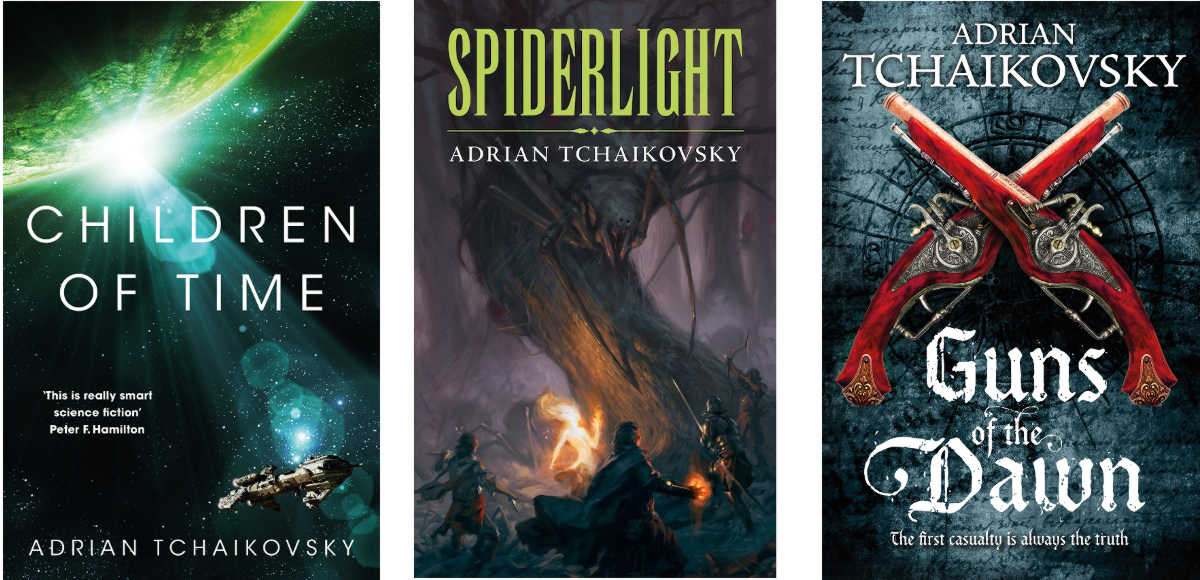
Book covers: Children of Time, Spiderlight, Guns of the Dawn

TD: Excellent. Thank you so much for this, it’s been really informative, and makes me want to go off and read Children of Time again!

[Adrian laughs, and thus we end.]


This is the second in a series of interviews with authors, developers, critics, journalists, and academics. If you'd like to make a suggestion, or be interviewed, do get in touch.

]]>
1
The Doctor http://www.stephrennick.com <![CDATA[Nor Have I Yet Outrun the Sun (Part 1)]]> http://www.epicureancure.com/?p=136 2017-08-11T20:29:37Z 2016-08-14T22:25:49Z

Mysterious thing, Time. Powerful, and when meddled with, dangerous.

Albus Dumbledore, Harry Potter and the Prisoner of Azkaban

More years ago than I’d like to admit, as an undergrad (or an ‘ickle secondie’, as Peeves might have called it), I had a paper about Harry Potter and time travel published in a small Sydney journal.[1] My philosophical ability has (I hope) improved since then, but the usefulness and interest of the text in question hasn’t diminished: Harry Potter and the Prisoner of Azkaban is one of only a handful of internally consistent, philosophically plausible, time travel texts – and is an exemplar of three of the main ‘paradoxes’ that arise in the time travel literature. I use it in teaching, in giving talks, and now – dear readers – I bequeath it to you.

Dean from Supernatural saying you're welcome title=

In this series, I’ll be looking at each of the three ‘paradoxes’ in turn, and how they can be overcome (or, as Heinlein put it – in a wonderful, if underutilised, portmanteau – ‘paradoctored’).[2] But first: why all the scare quotes around ‘paradox’? Well, because it isn’t clear that all 3 of the puzzles we’re interested are strictly paradoxes, in the logical purist’s sense – they don’t involve an explicit contradiction, but rather a conclusion that strikes us as unacceptable. (I’ll avoid the punctuation from now on, unless I’m making a deliberate point.)

Paradoxes are a prime target for philosophical consideration: they’re the equivalent of an alarm or flashing red light, indicating something wrong with one’s reasoning or starting assumptions. If a given scenario or argument is paradoxical, that counts against it. Many of the arguments against the possibility of time travel employ the idea that time travel and its consequences are paradoxical.

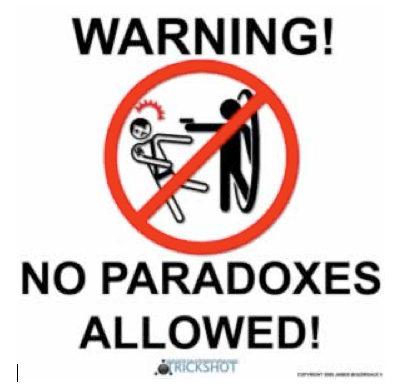
Warning! No Paradoxes Allowed!

For example, if I could travel back in time, it seems I could prevent my birth (think Back to the Future, or Futurama’s Roswell that Ends Well). But if I wasn’t born, how could I go back in time? (Never fear - as we’ll see, there’s good reason to think that time travel isn’t paradoxical in this way).

So paradoxes = bad, but interesting.

Now, where are the paradoxes in Harry Potter? (And, for those of you with insufficient dedication to re-reading/re-watching the series at every opportunity – where is the time travel?) Cast your mind back to the latter chapters of Prisoner of Azkaban[3]

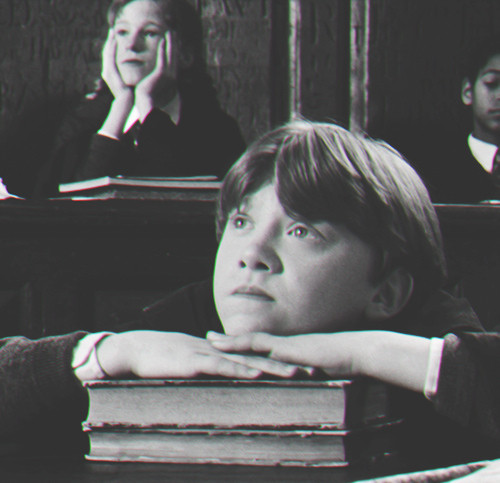
Ron, daydreaming in class.

Harry Potter, famous teen-wizard, is having a rather bad day. Hagrid’s hippogriff, Buckbeak, has apparently been executed…

‘Wait, wait, wait!’ I hear you exclaim. ‘APPARENTLY been executed? That’s not right, he WAS executed. And then Harry saved him. He changed the past!’ We’ll get to that. Promise. All that matters at this point is that it appears - rightly or wrongly – that Buckbeak has been executed. Let us resume.

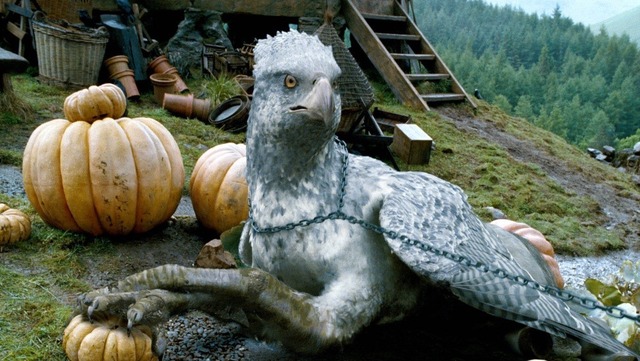
Buckbeak in Pumpkin Patch from Prisoner of Azkaban film

Hagrid’s hippogriff, Buckbeak, has apparently been executed, and our hero is attacked by Dementors and possibly about to die. On the verge of unconsciousness, he sees what he believes to be his dead father, who casts a Patronus Charm to save him. He wakes up in hospital after his miraculous rescue, only to find out that his newly-discovered godfather is about to be killed.

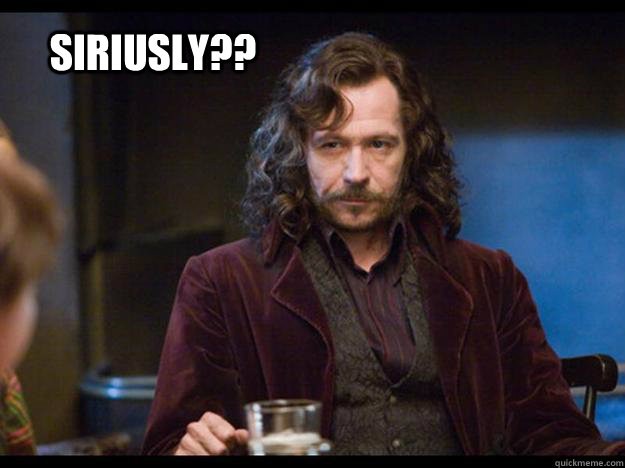
Sirius Black with caption, Siriusly?

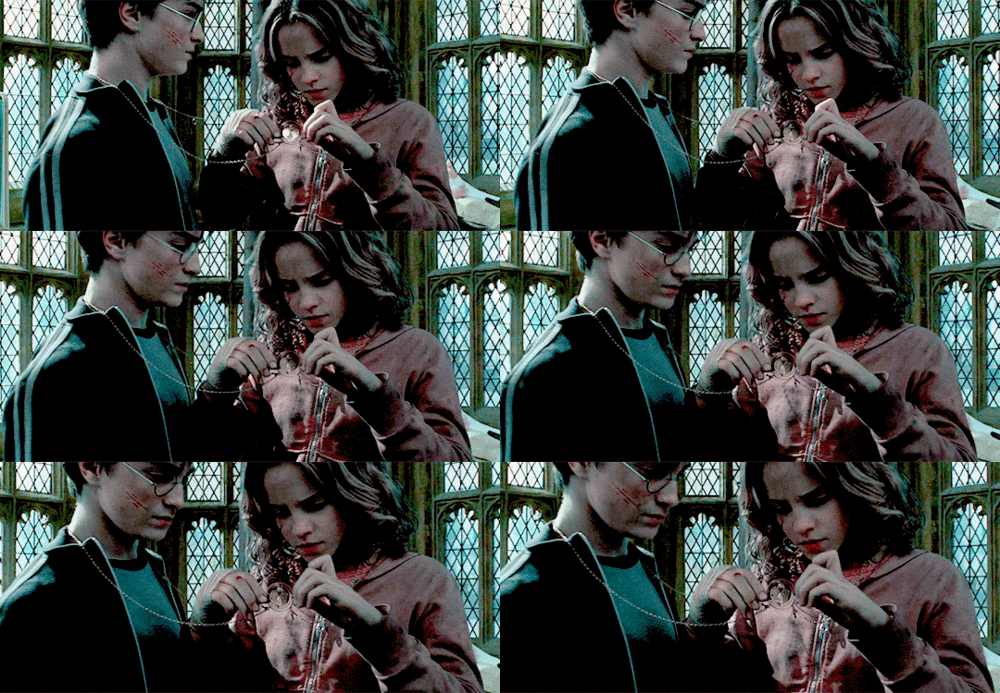
On the advice of the ever-so-wise Albus Dumbledore, Harry travels three hours back in time with his friend Hermione (who, let’s be honest, is the real hero of this story, and, interestingly, one of the very few female time travellers actually in control of the time travel device).

Hermione uses time turner in Hospital Wing.

Our daring duo save the ill-fated hippogriff. In the hopes of seeing his dead father, Harry watches the Dementors attacking, only to realise that it was himself that he saw, and proceeds to cast the life-saving Patronus (thanks to an odd bit of logic).

(‘Is that the bit where he…?’ Yes, yes, it is. We’ll get there.)

With Buckbeak’s help, Harry and Hermione free Sirius, and return to the hospital just as their earlier selves are using the Time Turner to depart. Thus ill-fortune is averted, several lives are saved, and the novel (and accompanying film) has a dramatic climax. Voila!

Gryffindor Quidditch team cheering.

And now, with memories refreshed, the paradoxes:

  1. Buckbeak the hippogriff appears to have been both killed and not killed.
  2. Harry survives to save himself because he is saved by himself.
  3. Harry knew he could cast the Patronus because he had “already done it.”

Paradoxes = bad, but interesting.

The first time we see the events in question, pre-time travel, Buckbeak seems to have been killed by the executioner Macnair: the golden trio hear the swish and thud of the axe, and Hagrid’s tears at the event. Post-time travel, we see Harry and Hermione save Buckbeak. Thus the following are both true – ‘Buckbeak was killed’ and ‘Buckbeak was not killed’ – and we have a (paradoxical) contradiction.

As for (2), Harry must survive the Dementor attack in order to be able to travel back in time to save himself, which leads to his survival and subsequent time travel… to save himself. The time travel seems to be ‘predestined’ by the circumstances of his survival, which leads to all sorts of questions: could he have chosen not to use the Time Turner? How can his future decisions affect whether he survives in the past?

And finally, how did Harry go about casting that Patronus? Such a charm requires a great deal of skill, far beyond the average third year, and a focus that Harry has struggled to muster in previous confrontations with the Dementors (and their Boggart mimics). This time, however, when it counts, Harry knows he can do it. Why? Because he’s already done it. But has he? Where does this confidence come from?

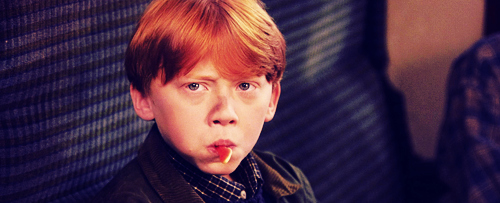
Ron with a puzzled face.

Parts 2, 3 and 4 of this series will cover each of these in turn. For now, give yourself permission to watch or read the novel ‘for academic purposes’ (i.e. guilt-free), and let us know in the comments what you think the solutions might be, and if you can find similar cases elsewhere.

Footnotes

[1] S. Rennick, Harry Potter and the Time Travel Paradox, Cogito, Vol. 4 No. 3, 2009, pp. 38-52.

[2] Robert A. Heinlein, – All You Zombies – , first published in The Magazine of Fantasy and Science Fiction, March 1959.

[3] The plot summary that follows is largely borrowed from the aforementioned Cogito paper.


References

  • Heinlein, Robert A., – All You Zombies – , first published in The Magazine of Fantasy and Science Fiction, March 1959.

  • Rennick, S., Harry Potter and the Time Travel Paradox, Cogito, Vol. 4 No. 3, 2009: 38-52.

  • Rowling, J. K., Harry Potter and the Prisoner of Azkaban, London: Bloomsbury, 1999.

Further Reading

If you’re interested in the philosophy of time travel, the best place to start is always David Lewis, The Paradoxes of Time Travel, American Philosophical Quarterly, Vol. 13 No. 2, 1976: 145-152.

A Time Travel Website is a great blog focussing specifically on the philosophy of time travel, and well worth a visit.

And for a vast array of timey-wimey tropes, see http://tvtropes.org/pmwiki/pmwiki.php/Main/TimeTravelTropes.

]]>
1
The Doctor http://www.stephrennick.com <![CDATA[Introducing the 'F' Word (Part 1)]]> http://epicureancure.nfshost.com/?p=9 2017-08-11T20:23:31Z 2016-07-03T21:52:35Z

Oracle: Candy?

Neo: Do you already know if I’m going to take it?

Oracle: Wouldn’t be much of an Oracle if I didn’t.

Neo: But if you already know, how can I make a choice?

The Matrix Reloaded

If the oracle knows the future, then – we might think, as Neo seems to – that this means the future is somehow fixed or inevitable; it is fated, predestined, beyond our control. But we like to think of the future as open, as up to us. We feel quite differently about the past: it’s over and done with, and we can know what happened then without our knowledge confining the past, or bringing about the past. Knowing the future, however, is a different matter. The future waits for us to shape it, to mould it – we’re free to do something about it. And it is this freedom that the oracle’s knowledge (or that of God, a supercomputer, a fortune teller, a future-visiting time traveller etc.) seems to threaten. How can Neo make a choice, if the choice already has a knowable outcome?

Neo isn’t the only character in such a quandary: these worries echo throughout the centuries, with early ponderings by Cicero, Augustine, and Boethius, to name a few.[1] In this series we’ll be looking at how pervasive these worries are (in fiction and in life), what we might mean by ‘free’, and why contemporary philosophers think that foreknowledge doesn’t imperil our free will. The first step, which will be the focus of this first instalment, is to examine a philosophically important, but often overlooked, distinction:

We can differentiate between things that might happen, things that will happen, and things that must happen. For example, I might (indeed, probably will) enjoy the new season of Archer, the sun will come up tomorrow, and a triangle must have three sides. When the oracle tells the truth about the future (as we learned in The Matrix, sometimes she lies), she describes what will happen. But her utterance doesn’t bring the future about, it doesn’t cause the future to be a certain way (except, perhaps, in self-fulfilling cases, which we’ll get to later in this series). Generally speaking, when someone knows the future, that knowledge describes, but doesn’t dictate (or cause), future events.

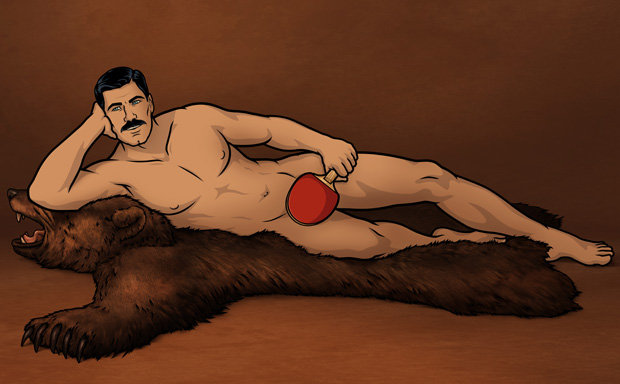
Sterling Archer, wearing nothing but a ping pong paddle, lounging on a bearskin rug.

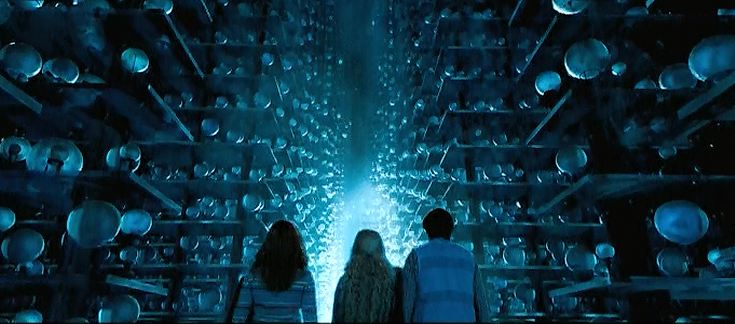
Take the Hall of Prophecy in the Department of Mysteries. Some of the prophecies describe a future that might come to pass. Some of them are accurate, and describe the future as it will occur. Some will, once heard, influence the choices of those that hear them. But none set the future in stone, none make it the case that something must happen, no matter what. As Dumbledore tells Harry, “the prophecy does not mean you have to do anything!... you are free to choose your way, quite free to turn your back on the prophecy!”[2].

“You see, the prophecy does not mean you have to do anything! … In other words, you are free to choose your way, quite free to turn your back on the prophecy!”

To see why this is the case, consider non-magical, non-mysterious foreknowledge, i.e. the kind we ordinarily think we have. In the course of an average day you might claim to know that you’ll be having pizza for dinner (because you intend to), that your BFF will call (because they told you they would), or that it’ll get dark eventually (because it has every night so far). In technical terms, these are, respectively, instances of intentional, testimonial, and inductive knowledge. Unlike when the Oracle knows Neo’s future, these sorts of cases don’t tend to worry us. It seems clear that you knowing you will have pizza for dinner doesn’t mean you had to consume Italian, and likewise, your knowing it will get dark at the end of the day won’t cause it to do so, or prevent the sun staying in the sky all evening (if, for instance, you were in the right part of the world for it to do so). Similarly, your knowing your friend will call doesn’t mean their calling was inevitable. Of course, you might indeed have knowledge in these cases – you might be reporting something true about the future – but it could have been otherwise. The world could have been such that you were mistaken, even if, as actually turns out, you were correct.

Hall of Prophecy in the Department of Mysteries, from Harry Potter and the Order of the Phoenix.

Forgive me some more terminology: epistemology is the study of knowledge, and there is a lot of debate about what is required for someone to know something (Will a true belief suffice? What sort of justification or evidence is required? Does the way they acquired the knowledge matter?). Although different theories posit different answers to these questions (some of which we’ll explore in future articles), most accounts of ordinary knowledge are fallibilist.That is, it is sufficient that a person’s beliefs happen to be true (along with the other criteria the theory requires, such as appropriate justification), it needn’t be the case that they couldn’t have been false. That’s a lot of negatives.

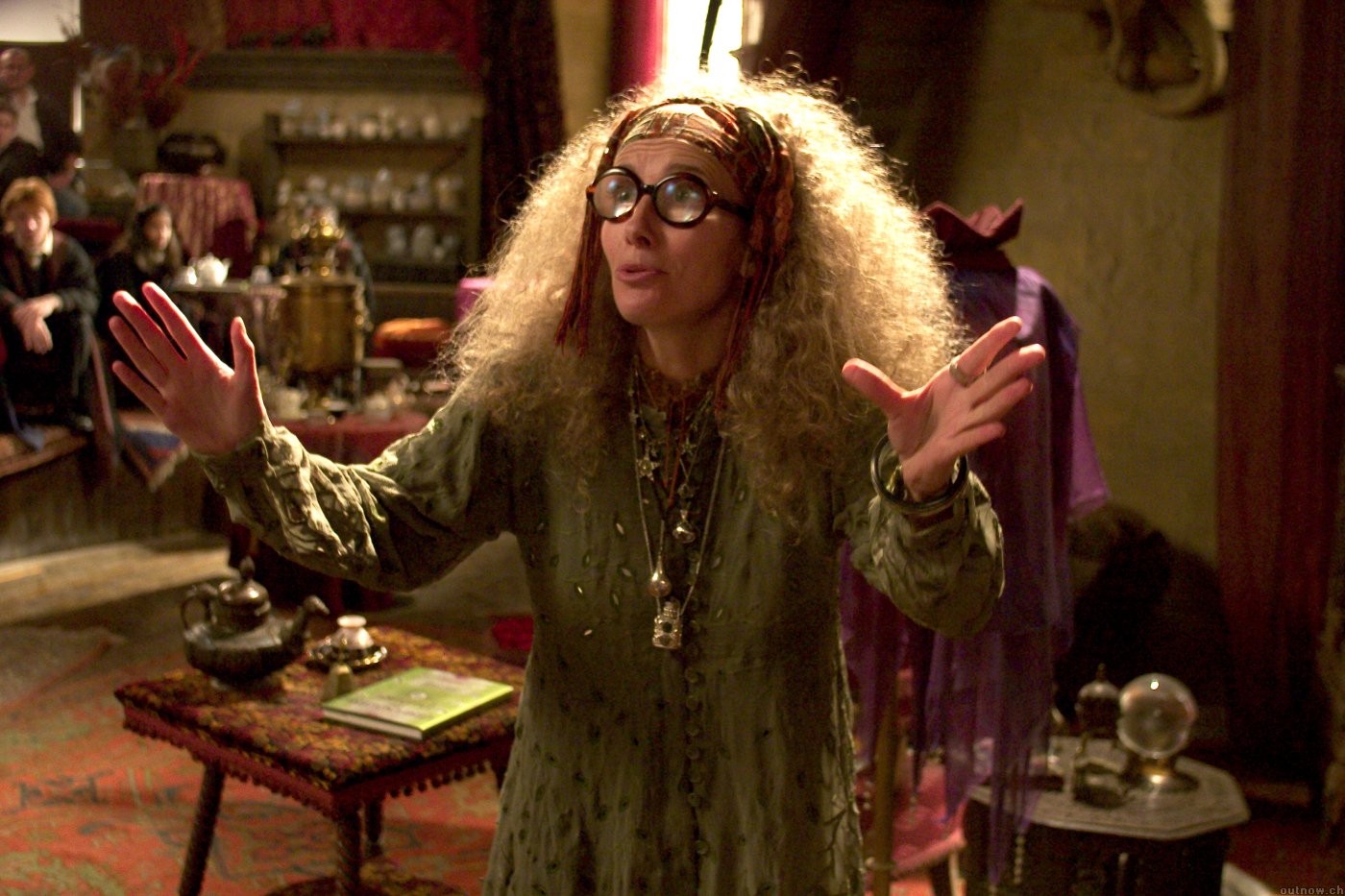
Take Professor Trelawney. Very occasionally (twice), she makes a strikingly accurate prediction. Mostly, her foretellings are ambiguous, and, like horoscopes, can be seen to loosely fit the events after they have unfolded. Suppose Trelawney tells Dumbledore that he will trip over a teapot next Thursday. Does she know he will? Most theories of knowledge will require three things for this to be true: that Trelawney believes Dumbledore will trip over the teapot, that it is true he will trip over the teapot, and some third requirement which varies depending on the particular account (that she acquired the belief in an appropriately reliable way, that she has good reasons for her belief etc.). If we are being fallibilists about knowledge – as many epistemologists are – then so long as Trelawney has a true belief that Dumbledore will trip over the teapot, it doesn’t matter that on other occasions she’s been wrong, or that if things had turned out differently, she would have been wrong on this occasion. What matters is that, as things turned out, she had a belief and it was true.

So, if you believe you will eat pizza for dinner, and satisfy the other required criteria of a given theory of knowledge, and then come this evening you do eat pizza, I’d be inclined to say that you knew you would (and, given our usual speech practices, I’d hazard that you’d say so too). This, then, is a case of ordinary foreknowledge. This is true even though you could have been proven wrong (by, for instance, your local pizza joint being sold out of pepperoni, or the Teenage Mutant Ninja Turtles moving into the neighbourhood), because as things turned out, you weren’t.

The mystical, magical type of foreknowledge is just like this. While it is true that if the Oracle knows Neo will take a sweet, he will take a sweet, there is nothing necessary about it being true: it didn’t have to be.[3] Neo could have refused, and the Oracle would have known he would (or been wrong). It’s just like reading your old diary: if it is an accurate record of the past, i.e. if what it says is true, then the events it describes occurred. You really did pine over Idris Elba as Heimdall, miss the bus and have to walk to school, or write a play featuring your cat as a soviet lunch-lady. But the diary doesn’t have magical powers (Horcruxes aside); it merely reports the past, it doesn’t constrain it. Likewise, Trelawney’s predictions don’t dictate the future, they just report the way it happens to turn out. It could have turned out differently, in which case Trelawney would have been mistaken, or would have made a different prediction. (This isn’t a new idea – you might have heard it in a different form in response to worries about God’s foreknowledge: you don’t have to do what God knows you will, but rather whatever you decide to do, God will know.)

The punchline: someone knowing the future doesn’t fix the future; it doesn’t make it inevitable or fated. There’s a difference between some that will come to pass, and something that has to.

Professor Trelawney, teaching a class.

But understanding the distinction is only the first part of this puzzle. Questions remain, including:

  • But surely ordinary knowledge of the future is different to the kind of knowledge the Oracle or Trelawney has. They can see the future. And what about a time traveller who can literally walk around in that future?! Doesn’t that make a difference?
  • What about self-fulfilling prophecies? Sometimes it’s knowing what you will do that makes you do it! Isn’t that weird?
  • Even if some predictions or prophecies turn out to be false, don’t the true ones undermine our free will? Sure, we might have acted differently, but obviously we didn’t, or it wouldn’t be foreknowledge!

In short: nope, totes weird (but not problematic), and usually no (but there may be exceptions). We’ll get to the why in future instalments.

For now, if this has piqued your interests, see the further reading below. If something’s unclear, or you have fictional examples to suggest or that you’d like explained, let us know in the comments.

Footnotes

[1] See for instance, Augustine, City of God, Book V Chapter 9 §2, and Boethius, The Consolation of Philosophy, Book V Chapter 3.

[2] J. K. Rowling, Harry Potter and the Half-Blood Prince, pp. 478-479.

[3] The logic goes as follows: necessarily if I know that you will do A, then you will do A. I know that you will do A, thus you will do A. However, it is fallacious to move from the necessity of the conditional (the if...then statement) to the necessity of the consequent (the bit after the 'then', in this case, 'you will do A'). Why? Because there's nothing necessary about my knowing that you will do A. I could have known you would do B instead, or mistakenly believed you would do A. For more on this, see Clark 2007 p. 52f. If you'd like further explanation (or to see it in symbols), let me know in the comments.


References

  • Augustine, City of God, trans. Henry Bettenson, G.R. Evans (ed.), London: Penguin Classics, 2006.
  • Boethius, The Consolation of Philosophy, trans. D. R. Slavitt, Cambridge, MA: Harvard University Press, 2008. (This sticks fairly close to the original Latin, but there's also a very readable translation by P. G. Walsh, OUP).
  • Clark, M., Paradoxes from A to Z, Second Edition, London: Routledge, 2007.

Further Reading

For more fictional instances of this trope, and some aversions, see:

]]>
0