Television – The Epicurean CureA celebration of thinking – rigorously, critically, and enthusiastically – about and through the media we love.2020-06-08T13:49:02Zhttps://www.epicureancure.com/feed/atom/WordPressTetra<![CDATA[Black Lives Matter]]>https://www.epicureancure.com/?p=7302020-06-08T13:49:02Z2020-06-08T13:49:01ZBlack Lives Matter. That should go without saying, and it’s awful that it doesn’t; we recognise the cost so many BAME people have paid and are paying as a result.
The Epicurean Cure is a celebration of thinking critically and robustly about the media we love. Further down you’ll find a selection of works by BAME authors: those that sit with worn spines on our bookcases; that we’ve read to the children in our lives; that we’ve pressed into the hands of friends; that we’ve sat up into the wee hours consuming. We’ve also included a series of links to other media created by BAME people or that give context to the current protests (those aren’t mutually exclusive!). Buy them from your local bookseller, borrow them from your local library, watch them, play them.
However, that’s not all you can do. We can’t speak to the lived experience of BAME people so must defer to those who can, and the overwhelming message we’re hearing is to donate, so that’s what we’ve done. Here are some resources with suggestions of where you can direct your time and funds:
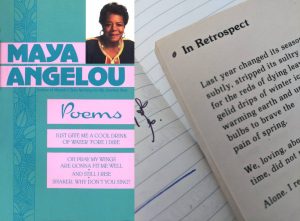
The philosopher’s well-worn copy collects four volumes of Maya Angelou’s poetry: Just Give Me a Cool Drink of Water ‘Fore I Diiie; Oh Pray My Wings Are Gonna Fit Me Well; And Still I Rise; Shaker, Why Don’t You Sing?
Her 17-year-old self marked favourites with dots in the corner of the pages, but every time she opens the book something new resonates. Zen Pencils' Gavin Aung Than illustrated “Phenomenal Woman”, and it’s well worth a look.
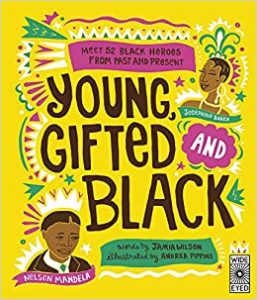
Young, Gifted and Black by Jamia Wilson, illustrated by Andrea Pippins
This gorgeous picture book depicts fifty-two black legends – one for each week of the year. It’s brightly coloured, uplifting and covers musicians, politicians, athletes and other important figures from all over the world.
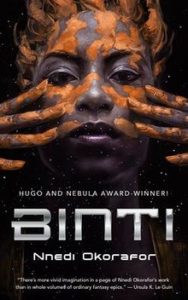
The first in a trilogy of stories about Binti, the linguist defies anyone not to read it in a single sitting (also it’s a novella, so you really don’t have an excuse). Tense, textured, thoughtful – Okorafor’s gift for characterisation keeps this story in your thoughts long after the last page.
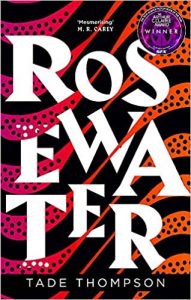
Rosewater by Tade Thompson
The first of a sci-fi trilogy set in Nigeria, Rosewater is widely acclaimed and it’s not difficult to see why. Both the philosopher and the linguist amongst us read and enjoyed it, and we tend to disagree about books, so that speaks for itself.
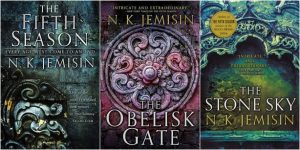
The Broken Earth Trilogy by N. K. Jemisin
These are excellent, simpliciter. The trilogy is described as ‘science fantasy’ and has fascinating world-building and multi-layered female characters. Jemisin was the first African-American author to win the Hugo Award for Best Novel, which she did for the first in the trilogy: The Fifth Season. She went on to win the Hugo for both sequels, The Obelisk Gate and The Stone Sky.
The only reason our own copies don’t feature in the image at the top of the page is that they’re constantly being loaned out to friends. The web dev waxes lyrical about how great they are – the rest of us agree.
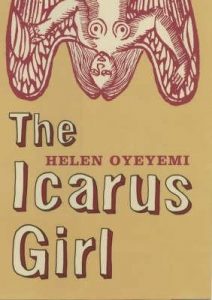
The Icarus Girl by Helen Oyeyemi
This is a phenomenally easy-to-enjoy read. Oyeyemi took time off school to finish it and the linguist is glad she (temporarily) said screw you to maths. A coming-of-age (sort of ghost) story set against the background of cultural upheaval; it was a pleasure to read.
Why I’m No Longer Talking To White People About Race by Reni Eddo-Lodge and The Good Immigrant edited by Nikesh Shukla
We’re grouping these two together for two reasons: (1) they’re both accessible, important insights into current society, history, and the lives of people of colour in the UK; and (2) there’s currently a petition to have them added to the GSCE reading list (which you can sign here). There’s an American version of the latter – The Good Immigrant USA – edited by Nikesh Shukla and Chimene Suleyman.
The Fat Black Woman’s Poems by Grace Nichols
We’d be remiss not to include Grace Nichols’s poetry: often hilarious, regularly moving, and always powerful. It was, and continues to be, an important joy to read.
If anyone has further suggestions we’re happy to share them, and if there’s anything in particular we can do, we’d appreciate hearing it.
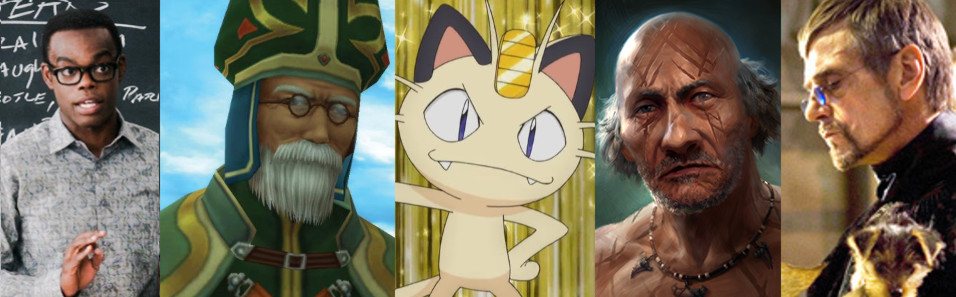
]]>0The Doctorhttp://www.stephrennick.com<![CDATA[Gender-Inverted Trope: Philosopher Queens]]>https://www.epicureancure.com/?p=6972020-06-06T11:32:29Z2020-05-08T13:13:07ZIn art, as in life, the trope of The Philosopher – found across media and genres – usually manifests as a male character, sage-like, with a tendency to impart useful information (although not always in the most efficient or transparent manner).
Chidi (The Good Place), Maechen (Final Fantasy X), Meowth (Pokemon), Zahua (Pillars of Eternity), Lord Vetinari (The Colour of Magic)
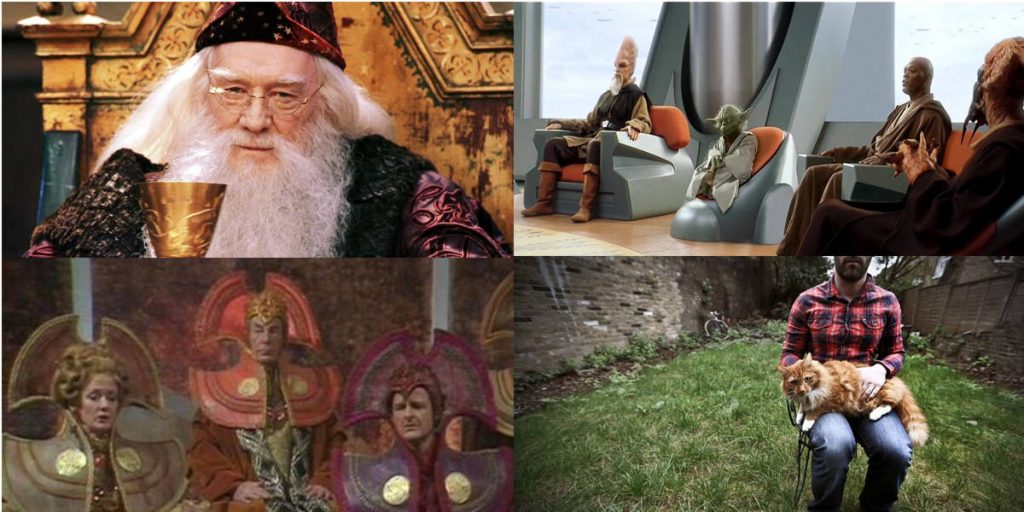
It is a more enlightened age. Perhaps a future, or a past long forgotten, when rulers are noble and just, and rule for their people, not just for themselves. Perhaps it is an Age of Reason, in which older, barbaric measures of manhood such as war and business have been phased out, and replaced solely with pure, unclouded Thought. Only those who have the capacity to Think have the right to Rule. In this realm, the Philosopher King is found.[2]
Albus Dumbledore, The Jedi Council, a trio of Time Lords and the Ruler of the Universe.[3]
In this short but sweet piece of pop(culture)corn, we highlight some gender-inverted instances of the Philosopher and Philosopher King. Let us know your favourite, or other characters deserving the mantle of Philosopher Queen, in the comments or on Twitter/Tumblr/Facebook.
"Eternal life for those who can afford it means eternal control over those who can’t."
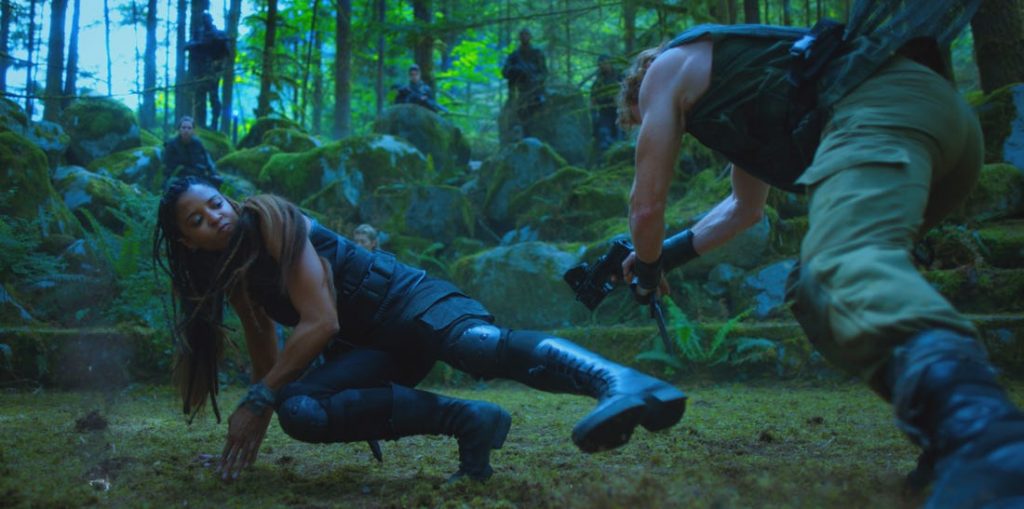
Quellcrist Falconer
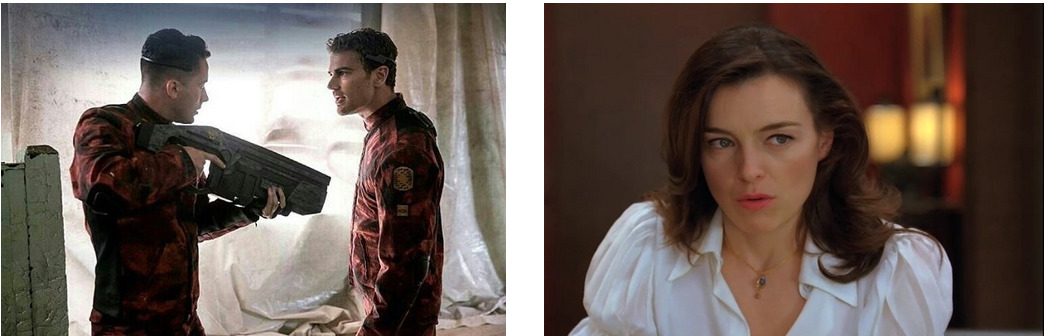
Quell is an academic and political revolutionary in Richard
Morgan’s Altered Carbon. The Netflix adaptation presents her as a
fighting philosopher rebel queen, whose actions against the ruling elite are
underpinned by her eponymous political philosophy:
Quellism is the political theory created by Quellcrist Falconer for the establishment of a hi-tech social democracy, having elements of socialism and anarchism. Quellism was an expression of Quell’s exasperation with both the inherent self-serving, elitist, corruption of right-wing politics and the back-biting, self-absorption of the left.[4]
Technological developments have allowed the rich to prolong their lives indefinitely, ‘resleeving’ their consciousness in new bodies – in the Altered Carbon universe, Quell notes, “Your body is not who you are.”[5] The political ramifications of this motivate Quell’s revolution:
The ebb and flow of life is what makes us all equal in the end […] We aren’t meant to live forever. It corrupts even the best of us…Eternal life for those who can afford it means eternal control over those who can’t.
Quell (S01E07)
Tallis
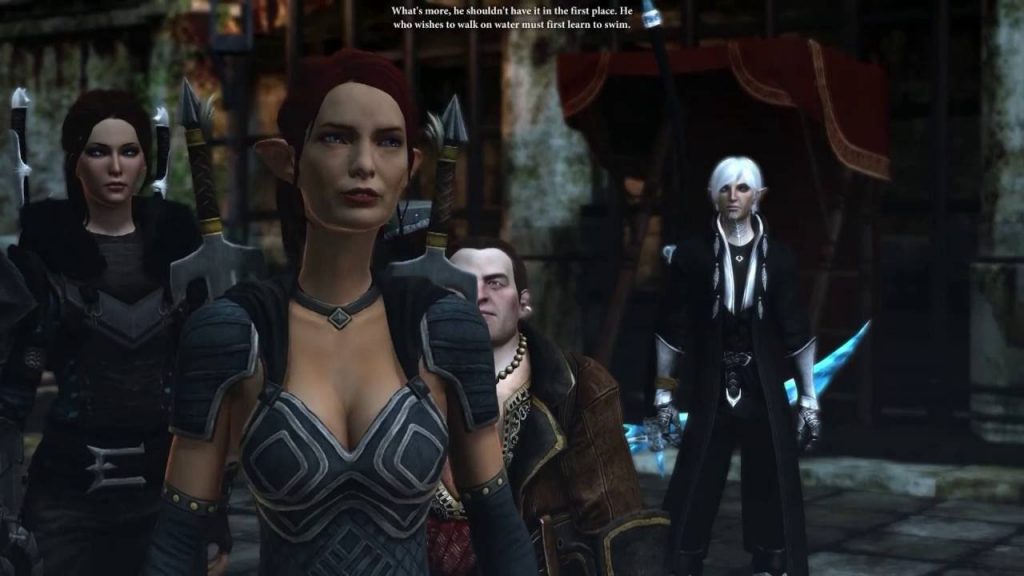
Tallis is an elven, Qunari assassin, from Dragon Age II’s
“Mark of the Assassin” DLC. A convert to the Qun, Tallis engages in both
epistemology and moral philosophy, contemplating her faith and her moral
obligations.
In classic trope-philosopher fashion, she delivers pithy one-liners as she accompanies the party:
He who wishes to walk on water must first learn to swim.
She who swallows wisdom in tiny chunks avoids choking.
It’s not always meant to end in violence. There are other paths. They do not all need to lead to the same destination.
Doubt is the path one walks to reach faith. To leave the path is to embrace blindness, and abandon hope.
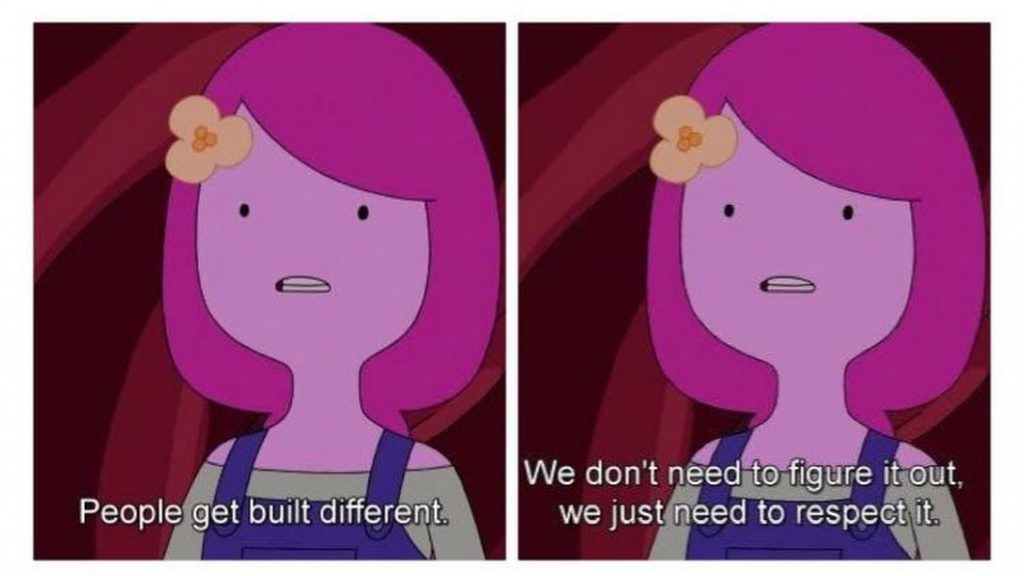
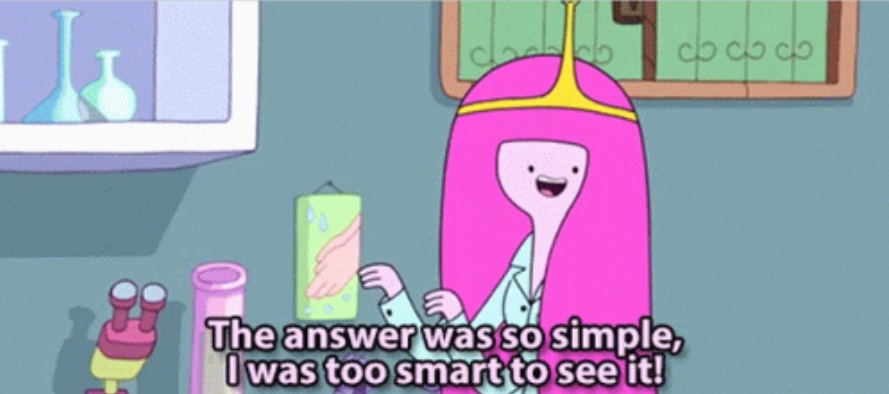
Princess Bubblegum
A literal philosopher queen – or at least, philosopher princess
– Bubblegum rules the Candy Kingdom in Adventure Time, a prosperous land
of sweet creatures with a tendency to explode when frightened. A metaphysician
and philosopher of science, Bubblegum champions invention and empirical
endeavours while denying the existence of magic:
Listen, all magic is scientific principles presented like “mystical hoodoo” which is fun, but it’s sort of irresponsible.
Princess Bubblegum, Wizards Only, Fool
In the course of the show, Bubblegum attends and organises
conferences, fashions a potion to revive the dead, and creates a variety of
creatures (including her own subjects) out of candy biomass:
As princess of candy kingdom, I’m in charge of a lot of candy people. They rely on me, I can’t imagine what might happen to them if I was gone… I am not going to live forever Finn, I would if I could, but modern science just isn’t there yet, so I engineered a replacement that could live forever.
Princess Bubblegum, Goliad
And, in true tropey fashion, Princess Bubblegum acts as a
guide to the show’s adventuring heroes, Finn and Jake, sharing her wisdom and
providing exposition:
Finn, sometimes you want someone and you want to kiss them and be with them, but you can’t because responsibility demands sacrifice.
Princess Bubblegum, Burning Low
"Doubt is the path one walks to reach faith. To leave the path is to embrace blindness, and abandon hope."
Mary Malone
Mary Malone is a physicist and the inventor of the eponymous device in Philip Pullman’s Amber Spyglass. Like Bubblegum, she is foremost a scientist, but Mary plays the role of the philosopher in guiding (and tempting) Lyra and Will. Drawing on her background as a former nun, she espouses her philosophy of religion as part of this process:
I stopped believing there was a power of good and a power of evil that were outside us. And I came to believe that good and evil are names for what people do, not for what they are.
Mary Malone, The Amber Spyglass
Sha'ira, the Asari Consort
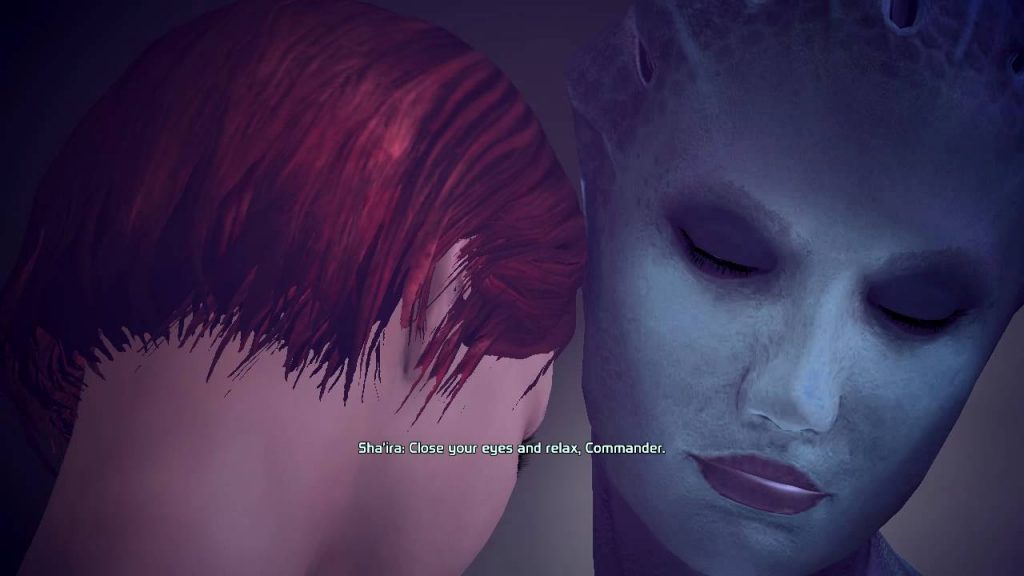
Sha’ira appears in the Mass Effect series, offering “personal services as well as entertainment and conversation”[6], but she is particularly sought after for her advice. After providing assistance to the consort in the first Mass Effect instalment, Sha’ira offers the player character Shepard a ‘gift of words’: “an affirmation of who you are, and who you will become”. Shepard observes that, from description, the consort sounds like an oracle; in this and her advice she is much like the classic trope instances. Another character rejoins that Sha’ira is merely a woman, “with remarkable compassion and a generous spirit”.[7]
Sha’ira has been likened to a Greek hetaira – in both cases, depending on who you ask, they are described as sex workers, escorts, and/or elite, educated women.
Want to philosophise about other examples? Do so in the comments, or on twitter/tumblr/facebook.
Footnotes
[1] The original argument for why it’s a good idea for philosophers to be kings (or kings to be philosophers) see Plato’s Republic, Books VI-VII.
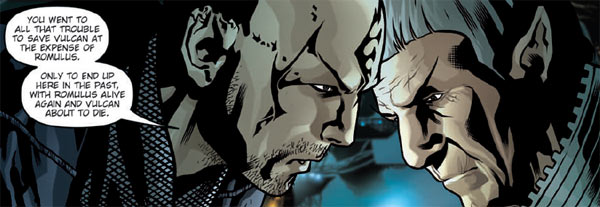
]]>0Guest<![CDATA[Picard, Time Travel & Moral Motivation]]>https://www.epicureancure.com/?p=6592020-06-06T11:32:53Z2020-03-21T14:33:54ZThe first season of Star Trek: Picard is more than half-way
through now. I’ve thoroughly enjoyed being back in Picard’s world. However, I
have a gripe! The series entrenches the destruction of Romulus into the
history. We were already familiar with the destruction of Romulus from J. J.
Abrams’s 2009 Star Trek. In that film, it is established that shortly
after the destruction of the Romulan homeworld, Nero – the villain of that
story – travels back in time, leading to the creation of what has become known
as the “Kelvin timeline”.
With the movies taking place in the Kelvin timeline, and Picard taking place in the original timeline, commencing after Nero has travelled back in time, it is established that both of these timelines exist. All well and good, right?
Wrong. This leads to some horrible implications over the
whole of Star Trek. Let me explain.
The Timelines
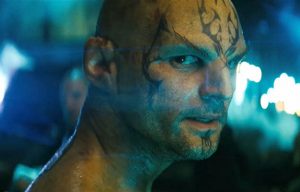
Nero accidentally travels back in time from 2387, arriving
in 2258. As Zachary Quinto’s Spock explains,
Nero’s very presence has altered the flow of history, beginning with the attack on the USS Kelvin, culminating in the events of today, thereby creating an entire new chain of incidents that cannot be anticipated by either party.[1]
This lets the audience know that the universe won’t – or
need not – turn out as they remembered from classic Star Trek. This is
nice, because we can’t sit back happily knowing what’s going to happen.
But here Spock talks of Nero altering the flow of
history. This suggests that the timeline was one way, and Nero’s travelling
back in time has changed it. For one thing, Nero destroys Vulcan because he
blames the Federation and Spock for the destruction of his own homeworld and
wants revenge.
The storyline of Picard takes place after Nero has
gone back in time, in 2399. So, we know that the timeline continued after
Nero’s travelling back in time. And it continues with the same history it
always had. In Picard’s history books, there is no mention of Nero encountering
Starfleet in the 23rd century. Vulcan is still intact. Everything
has simply continued as normal, it seems, but without Nero and Spock (who
presumably everyone thinks have mysteriously disappeared).
So, we have two timelines. “What’s the problem?” I hear you
ask. Well, I’ll tell you!
What a Mess
For one, this is incongruous with lots of other instances of
time travel in Star Trek. In First Contact, for instance, the
Enterprise-E Borg sphere goes back in time. While somehow protected in a
“temporal wake”, they see the effects of the Borg sphere travelling back; they see an Earth assimilated. As Data says,
Earth then has a “population of nine billion, all Borg”.[2]
Presumably the Enterprise didn’t magically jump from one timeline to another
here, so what would explain this? The obvious thought is that there is one timeline,
and the Borg sphere altered it by preventing Zefram Cochrane’s launch and
advancing humanity’s first encounter with the Borg by hundreds of years.
However, if it is the case that when you go back in time,
rather than altering the timeline, you create another, this doesn’t make
sense. What the Enterprise-E crew should have seen was everything continuing as
normal – at least in their timeline. The Borg assimilation of Earth would have
taken place in an entirely different timeline, as with Nero’s
destruction of Vulcan.
Perhaps there is some way that we could explain this. Maybe sometimes – in special cases perhaps – going back in time creates a new timeline, but not always. As an explanation goes, however, that seems to raise more questions than answers!
Alternatively, we might think that this was a mistake, and we should ignore it like we do lots of other gaffes from writers. Sticking with First Contact, for instance, the Borg would be pretty stupid if they decided to invade 24th century Earth then go back in time, rather than going back to the 21st century and attacking the then-relatively-defenceless Earth. We tend to forgive things like this because we care about the general story. So a mystery of how the Enterprise-E could see what should have been in another timeline is maybe just something we should sweep under the rug.
Picard seems to commit us to the idea that when you change something in the past, a new timeline is formed, branching away from the old one. But both timelines exist.
However, the entire show of Picard is based on the premise that the destruction of Romulus happened, Nero went back in time, but things are still going on in the timeline as if everything was normal. So, it looks like we might have to accept this notion of time travel (with possible exceptions for looping cases, like in Time’s Arrow, where a person’s going back in time doesn’t change anything, because they were there already). [Editor's note: for more on time travel where you don't change the past, see the discussion here]
So, to clarify, it looked like Star Trek was
endorsing a model where you could overwrite what happens in the past, replacing
it with new events. But Picard seems to commit us to the idea that when
you change something in the past, a new timeline is formed, branching away from
the old one. But both timelines exist (hence the events of Picard happening).
Moral Motivation
However, I really don’t like this model, largely because of
what it means for moral motivation in loads of classic Star Trek. There
have been a lot of episodes over the various series that have made use of time
travel. In fact, there have been so many that
you could rank a top 15. In most of these, something bad happens, and our
heroes try to prevent it from happening. Or so we thought.
For example, consider Endgame, the finale of Star Trek Voyager.
We discover that Janeway did get Voyager home in 2394, but lost many of the
crew along the way, including Seven of Nine. In 2404, Admiral Janeway gets her
hands on some time travel technology and uses it to meet with Voyager back in
2378. With the help of 25th century technology, she is able to get
the crew home earlier, motivated principally by her desire to save Seven of
Nine.
The branching model – in which a new timeline is created,
via time travel, in addition to the original - changes the situation. The
timeline where Seven of Nine died presumably continues. Janeway no longer saves
Seven, but creates a whole new one, and a whole new universe along with
her! In the First Contact case, things look even weirder. Rather than
Picard restoring the timeline, if both timelines exist regardless, what
he’s actually doing is deciding what timeline he wants to live in. This is
hardly the noble goal that it looked like before.
Another example features in The New Generation’s
Firstborn. In that episode, a mysterious Klingon, K’mtar, comes aboard the
Enterprise to help Worf and Alexander. We discover through the episode that
K’mtar is actually a future version of Alexander, who, wracked with guilt for
events that led to his father dying, tries to fix this. But, if the timeline he
comes from will exist no matter what, he doesn’t really fix anything.
His father did still die. Nothing is altered there.
This seems to get something wrong about the characters’
motives. Janeway wants to save Seven. And in First Contact, Picard wants
to stop the Borg from having assimilated Earth. Yet under the new model, that’s
not really what’s happened at all.
And it gets weirder
Maybe all of this doesn’t bother you. Perhaps this seems
fine. And bringing a new timeline into existence that has certain features
isn’t so bad.
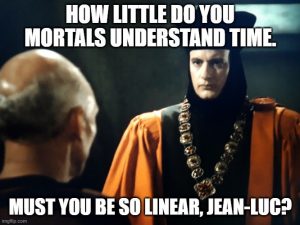
But when we think about how this affects how we should live, things can start to look weirder. Lots of philosophers (just like normal people!) are interested in how we should live our lives. What makes it good to act one way, or another? What makes a certain way of living right or wrong? What is the good life (if there is such a thing)? A popular response to this is the consequentialist solution. For the consequentialist, what you should do is make the world better. In fact, consequentialists usually think that what we have to do, morally speaking, is make the world as good as we can. So, if you’ve got two options before you, and one of them makes the world better than the other, that’s the one you should pick. Usually, consequences happen after you act, but when we think about backwards time travel, this need not be the case.
And when we think about the consequences of Nero going back in time, if he creates a whole new timeline, in addition to the one that already existed, we’ve got a whole universe of extra things in our ontology (the things that exist). So, we might think that he made the world (or more accurately, the complete set of things that exist) better, even though he destroyed Vulcan!
The consequentialist is likely to think even weirder things
than that, if we have this model of time travel. Because they think you should
cause everything to be as good as possible, if we think two universes are
better than one, it looks like they have to say you’re morally required
to make more universes. So long as, in total, the extra universe you create by
going back in time is on the whole a good thing, it seems like that’s what you
have to do!
Maybe we don’t actually think the world is that great, but
most people seem to think it’s at least a good thing that it exists rather than
nothing. Gottfried Leibniz actually thought that the world we’re in is the best
of all possible worlds.[3]
If he’s right that we live in the best of all possible worlds, then even worlds
close to ours would be pretty good, so we should make more of them!
Janeway no longer saves Seven, but
creates a whole new one, and a whole new universe along with her!
And
if I happen to have a time machine, and I think the universe is a good thing,
it looks like I have an interesting choice ahead of me. I could try to continue
in my current timeline, making it as happy as possible. Alternatively, I could go
back in time and make a very tiny change. Perhaps one so insignificant
that all the people in the new timeline will be pretty much exactly the same
(maybe quantum events would take place differently?). This would in effect make
the amount of happiness in this timeline since the branching point (and for the
entire future ahead) happen twice. And I could keep doing this, sending grains
of sand to very distant points in the universe fifty years ago, creating a new
universe every time.
This strikes me as super weird. That in itself doesn’t give
us any reason to believe it’s a bad model of time travel. But it does mean that
whenever one of our heroes ‘goes back in time to fix things’, they’ve not fixed
things at all. Instead, they’ve seen a timeline they don’t like and decided to
leave and join a new one. This is hardly the exemplary behaviour I’ve come to
expect from my protagonists!
If you’re interested in learning more about what philosophers say about time travel, a great place to start is David Lewis, The Paradoxes of Time Travel, American Philosophical Quarterly Vol. 13 No. 2 (1976), pp. 145-152.
For more on consequentialism (outside of time travel questions), and why people find it plausible, it’s worth checking out the Internet Encylopedia of Philosophy entry. For more in-depth information on moral motivation, see the SEP entry.
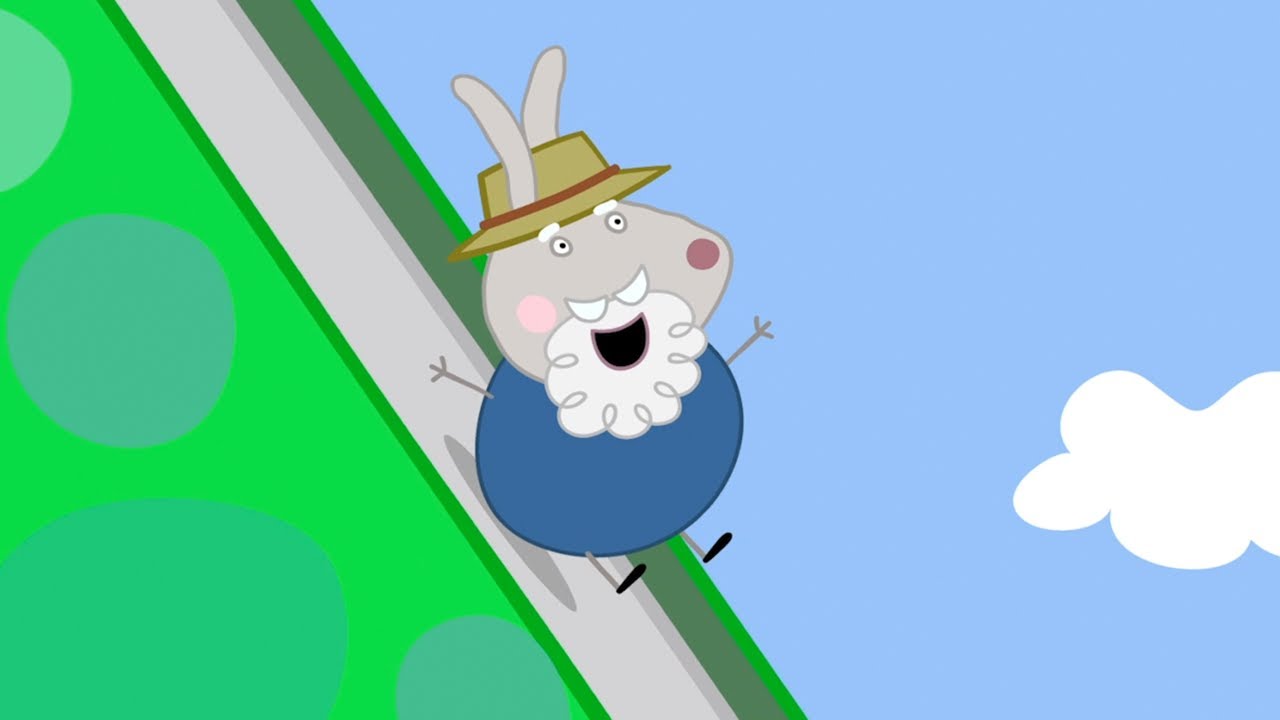
]]>0The Doctorhttp://www.stephrennick.com<![CDATA[Peppa Pig & the Ontological Argument]]>https://www.epicureancure.com/?p=5862019-09-21T12:35:43Z2019-09-21T12:35:43ZThere are many things one could say about Peppa Pig, but here’s something you mightn’t have heard before: it makes some fascinating philosophical claims. I am merely a tourist in the land of Peppa Pig, having watched a handful of episodes with a young enthusiast, so by all means get in touch with your own favourite thought-provoking episode (on Twitter, Facebook or via the comments below).
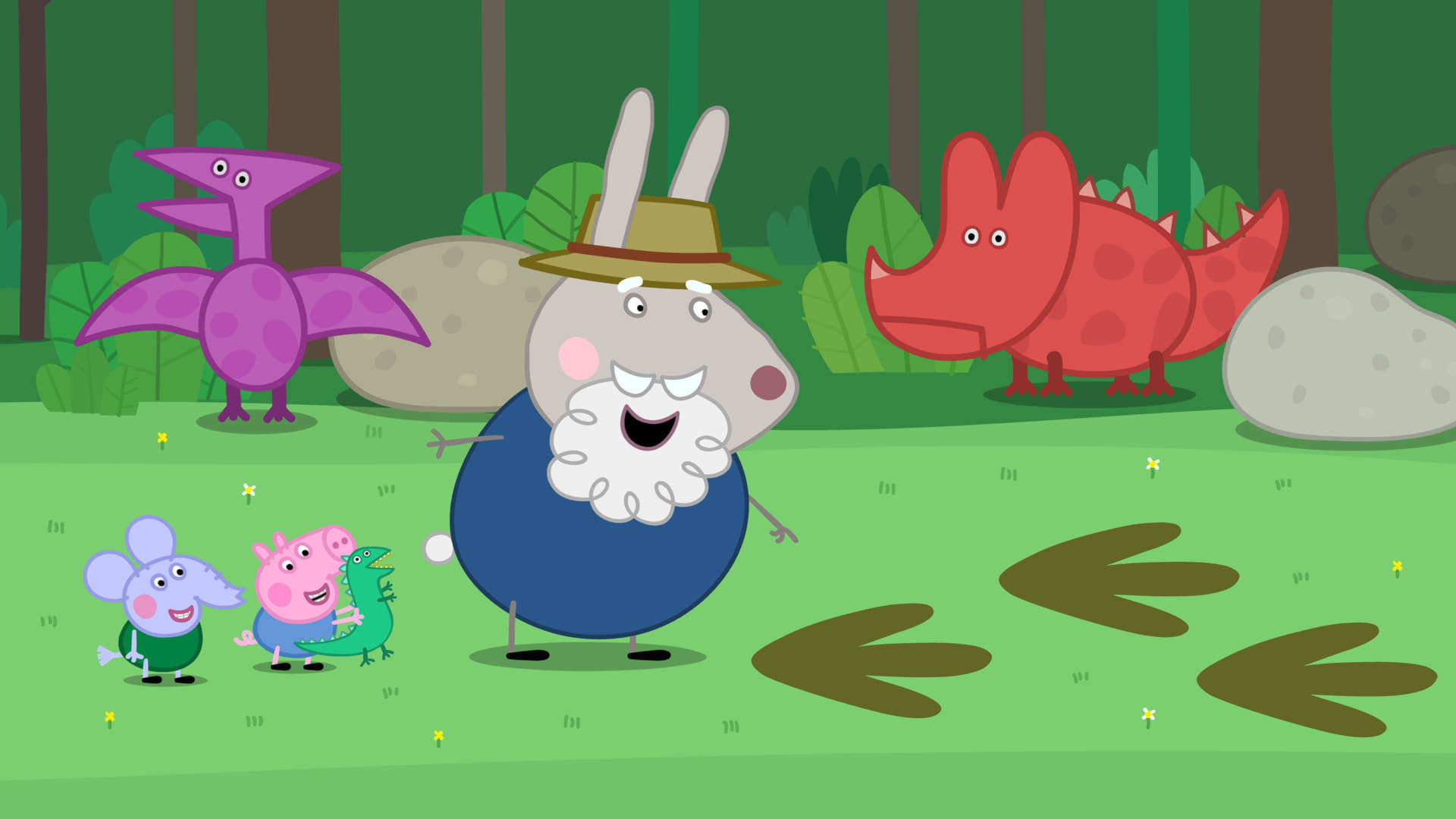
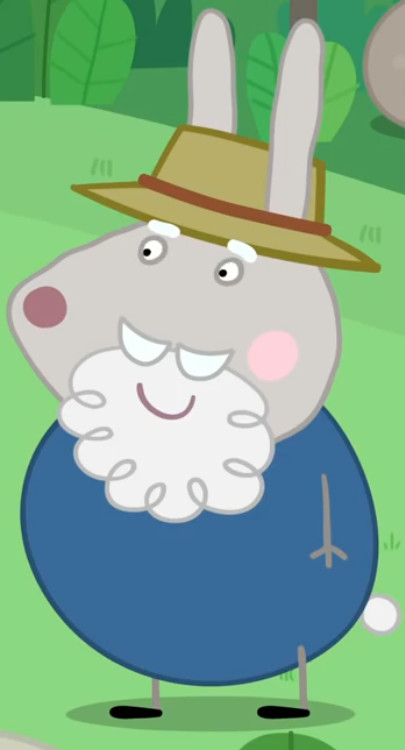
One that has stuck with me for many years is Season 4 Episode 16: Grampy Rabbit’s Dinosaur Park (which scores a tragically low 5.4/10 on IMDB).[1] The synopsis reads:
To celebrate Freddy Fox’s birthday the children go on a trip to a Dinosaur park where they follow dinosaur footprints to find Freddy’s birthday treat.
This does not do it justice.
At the opening of the episode the cast of characters arrive at Grampy Rabbit’s dinosaur safari park and Peppa asks the first instance of a question which recurs throughout the episode:
Peppa Pig: Are there really dinosaurs here?
Grampy Rabbit: No, just pretend ones.
Peppa Pig: Phew.
Following this a small elephant pipes up about the demise of the dinosaurs millions of years previously and the narrator dismisses him as a “clever clogs”. Fear not, lovely reader - we shall not be so easily deterred by this blatant anti-intellectualism.
As the children and parents move through the dinosaur park, Daddy Pig notes that the dinosaur footsteps they’re following look very real, and double-checks that there are no living dinosaurs in the park. Grampy Rabbit assures him that there aren’t, and it soon transpires that the footprints lead to a gigantic dinosaur slide. Merriment ensues.
Finally, Grampy Rabbit announces that they are to find a dinosaur egg, and thanks to Freddy Fox’s keen sense of smell the task is swiftly completed. It is at this point that the episode’s most fascinating claim is made.
But before we get to spoilers, some groundwork needs to be laid. While Peppa Pig and friends are concerned with the reality of dinosaurs – at least the ones in Grampy Rabbit’s park – their discussion readily applies to much thornier philosophical debates.
Is it real?
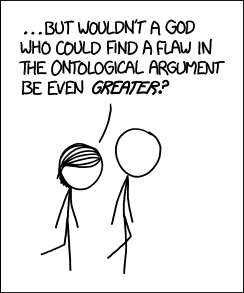
Back in the 11th century, St Anselm was likewise concerned with matters of existence, albeit of God rather than dinosaurs. Anselm proposed what’s taken to be the first of a series of arguments known as ‘ontological’ arguments for God’s existence.[2] It can be found in Chapter 2 of his Prosologion,[3] and goes roughly[4] like this:
God is a being than which nothing greater can be conceived.
Conceived doesn’t mean quite the same thing as imagined in philosophical circles – there’s debate about how exactly to conceive of ‘conceiving’ – but we can treat them as roughly interchangeable for our purposes. So the greatest thing one could imagine is God. If you can conceive of something greater than God, you weren’t conceiving God correctly.
Things can exist in the understanding alone, or in reality as well.
Anselm uses the example of a painter planning what he will paint. The painting exists in the painter’s mind; once it is painted it will also exist in reality.
That than which nothing greater can be conceived must exist in reality, not merely in the understanding.
Anselm contends that if God were just imagined – i.e. existed only in our minds – then God wouldn’t be the greatest thing of which we could conceive. Something that we conceive of as existing in reality – i.e. something we conceive of as real – is greater than something we conceive of as merely imaginary.
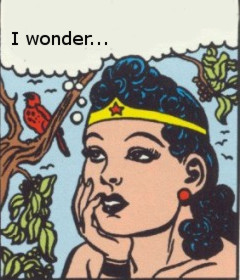
To make this a little clearer: take Wonder Woman. What would be better, greater, more magnificent: a Wonder Woman who exists merely in comic books, or a Wonder Woman who exists as we do?
For Anselm, the answer is obvious: the real Wonder Woman is superior to the fictional one. If God is not just conceivably great but the greatest thing of which we could conceive, and existing in reality makes you greater than existing only in our minds, then God – i.e. the greatest thing of which we could conceive – must exist, otherwise God wouldn’t be the greatest thing of which we could conceive.
So, God must exist.
In Anselm’s words:
Therefore, if that than which nothing greater can be conceived exists in the understanding alone, the very being than which nothing greater can be conceived is one than which a greater being can be conceived. But obviously this is impossible. Hence there is no doubt that there exists a being than which nothing greater can be conceived and it exists both in the understanding and in reality.
Anselm, Prosologion
Back in the 11th century, St Anselm was likewise concerned with matters of existence, albeit of God rather than dinosaurs.
Following Anselm, big philosophical names produced their own ontological arguments: Descartes, Leibniz, Godel, Plantinga, among others. There have been various refutations of them; nowadays ontological arguments are generally not considered very persuasive. However, as Bertrand Russell notes:
The argument does not, to a modern mind, seem very convincing, but it is easier to feel convinced that it must be fallacious than it is to find out precisely where the fallacy lies.[5]
And this is where Peppa Pig reveals its philosophical insight. Anselm’s ontological argument relies on the idea that something that exists in reality is greater than that which exists only in our minds. In other words, that something real is better or greater than something not real or imaginary. Many previous critics have argued that existence isn’t the sort of thing that bears on greatness: strength might, or goodness, but existence is a different kind of thing to those. Peppa Pig, by contrast, strikes in more direct fashion.
When we left them, our cast of characters had come upon the sought-after dinosaur egg. Peppa asks,
“Is it real?”
Grampy Rabbit: It’s better than real. It’s pretend.
[2] Ontology is a subset of metaphysics dealing with the nature of being. Ontological arguments of the kind mentioned above purport to derive God’s existence from reason and logic alone, rather than experience (that is, from premises that are a priori, necessary and analytic).
[4] I say roughly for two reasons – firstly because this is a rather cursory reconstruction on my part, and secondly because a more formal reconstruction of Anselm’s argument is not as straightforward as it might at first seem. Cf. Eder, G. & Ramharter, E. Formal reconstructions of St. Anselm’s Ontological Argument”, Synthese (2015) 192: 2795. https://doi.org/10.1007/s11229-015-0682-8
[5] Bertrand Russell, History of Western Philosophy, (London: Routledge, 1961). Book 3 Part I Section XI p. 568. If you're interested in objections to the ontological argument, see Further Reading below.
Himma, Kenneth, Anselm: Ontological Arguments for God’s Existence”, Internet Encyclopedia of Philosophy, (ND). https://www.iep.utm.edu/ont-arg/
The Wikipedia page on Tarzan’s yell contains more information than you would ever need in order to recreate the distinctive sound (to which Grampy Rabbit plays homage in his descent on the slide): https://en.m.wikipedia.org/wiki/Tarzan_yell
Finally, if you want to continue your philosophical journey by way of further Peppa Pig episodes, might I suggest starting with S3 E17 – Mr Potato Comes to Town – which introduces children to the concept of cannibalism by way of this delicious (excuse the pun) exchange:
Mr Potato: “Eat fruit and vegetables.”
Peppa Pig: “Which ones should we eat, Mr Potato?”
Mr Potato: “Apples, oranges, carrots, tomatoes…”
Peppa Pig: “Potatoes?”
Mr Potato: “Ermmm…”
]]>0The Doctorhttp://www.stephrennick.com<![CDATA[The Turing Test (Part 1)]]>https://www.epicureancure.com/?p=5632018-10-18T23:26:26Z2018-10-18T23:26:26ZRelated to the question of ‘what makes us, us?’, the possibility of computer minds is oft-explored in fiction and is a hotly-debated, complex area of interdisciplinary research. Could computers have minds, or think? And if not, what is the mark of the mental that distinguishes them from us? E. J. Lowe sets the scene nicely:
Our supposed rationality is one of the most prized possessions of human beings and is often alleged to be what distinguishes us most clearly from the rest of animal creation…indeed… there appear to be close links between having a capacity for conceptual thinking, being able to express one’s thoughts in language, and having an ability to engage in processes of reasoning. Even chimpanzees, the cleverest of non-human primates, seem at best to have severely restricted powers of practical reasoning and display no sign at all of engaging in the kind of theoretical reasoning which is the hallmark of human achievement in the sciences. However, the traditional idea that rationality is the exclusive preserve of human beings has recently come under pressure from two quite different quarters. On the one hand, the information technology revolution has led to ambitious pronouncements by researchers in the field of artificial intelligence, some of whom maintain that suitably programmed computers can literally be said to engage in processes of thought and reasoning. On the other hand, ironically enough, some empirical psychologists have begun to challenge our own human pretensions to be able to think rationally. We are thus left contemplating the strange proposition that machines of our devising may soon be deemed more rational than their human creators.[1]
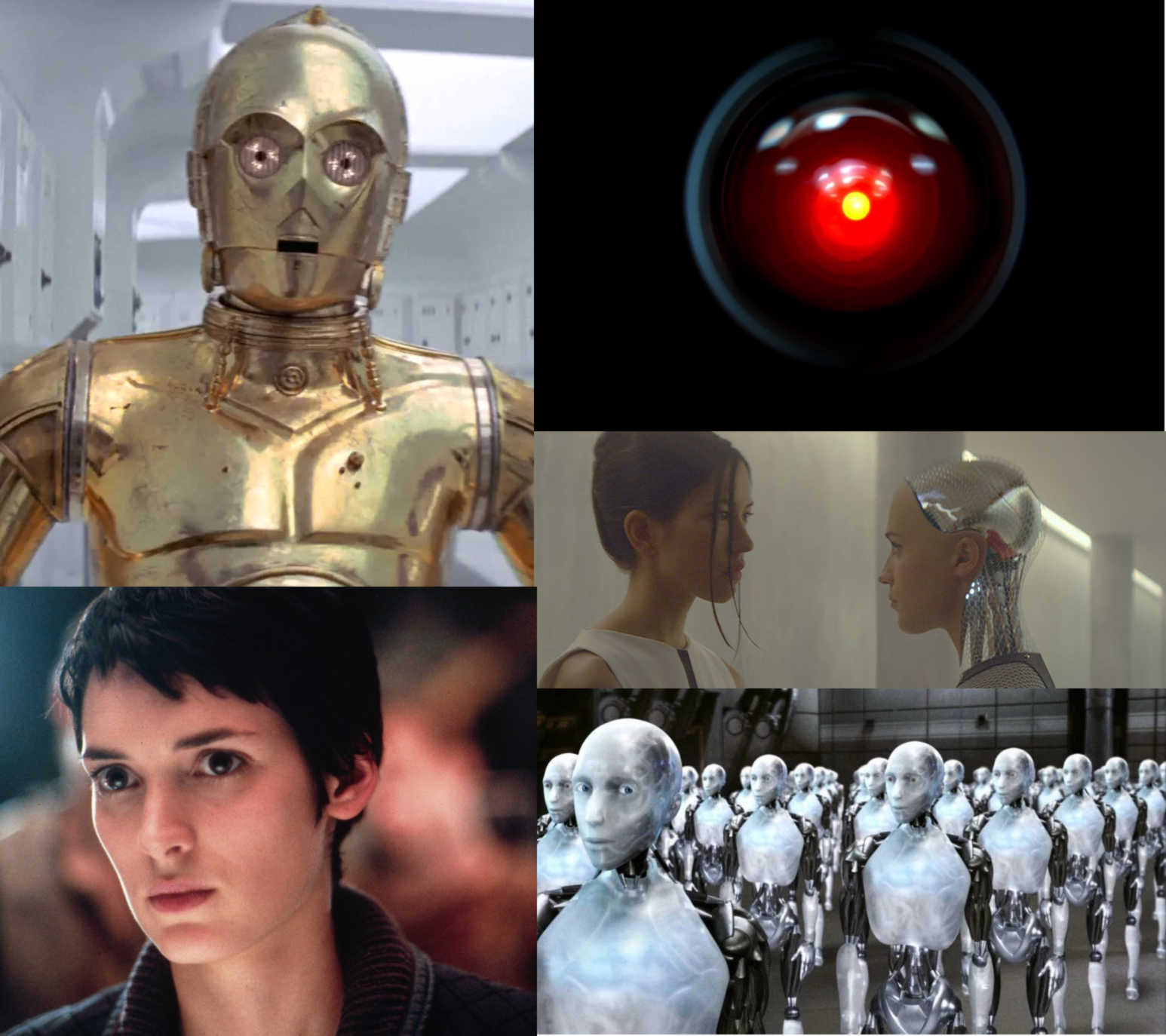
There is considerable debate about what it would mean to say that a machine has a mind. But it’s clearly not an unimaginable proposition; we see lots of instances in sci-fi:
Here are two questions we might want to answer:
What is the mark of the mental? I.e. what is it that distinguishes or defines a mind?
How do we test for a mind?
There are lots of ways we might answer the first question: creativity, rationality, use of language, the ability to have feelings…
(If you’re interested, we can cover some of these in a future piece.)
As for the second, sci-fi frequently gives the same answer: the Turing Test.[2] But we’re getting ahead of ourselves…
A. M. Turing, mathematician and pioneer computer theorist, designed a test to decide whether a computer could think. A computer would pass the test if it could perfectly simulate a thinking person, that is, if anyone interacting with it would be fooled into thinking it was human. Turing spelled this out in terms of what he called ‘the imitation game’:
The “imitation game”… is played with three people, a man (A), a woman (B), and an interrogator (C) who may be of either sex. The interrogator stays in a room apart from the other two. The object of the game for the interrogator is to determine which of the other two is the man and which is the woman… The interrogator is allowed to put questions to A and B… In order that tones of voice may not help the interrogator, the answers should be written, or better still, typewritten. The ideal arrangement is to have a teleprinter communicating between the two rooms… We now ask the question, “What will happen when a machine takes the part of A in this game?” Will the interrogator decide wrongly as often when the game is played like this [between a machine and a human being] as he does when the game is played between a man and a woman? These questions replace our original, “Can machines think?”[3]
Or, as it’s explained in the film of the same name:
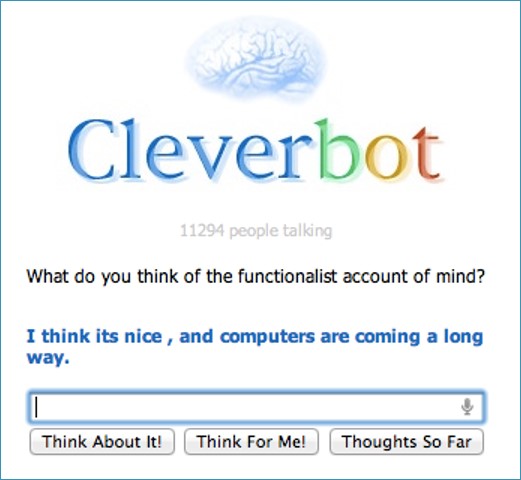
To see how this works, imagine you are confined to a room with a computer. On the screen are two chat windows, each showing your conversation with a different respondent. Using the computer, you can send and received typed messages to the two respondents. One of them is another ordinary human being (who speaks your language). The other is a computer program, designed to provide responses to your questions (perhaps a chat bot like Cleverbot).[4] You are allotted a period of time – let's say 10 minutes – during which you can send whatever questions you like to the two respondents.
Your task is to try to determine on the basis of their answers which is the human being. The computer passes the test if you can’t tell which is which (except by chance – the test is repeated to rule out luck).
"We are thus left contemplating the strange proposition that machines of our devising may soon be deemed more rational than their human creators."
Whether a computer or program can pass the Turing Test is an empirical question – that is, it can only be answered by observation (unlike many of the philosophical questions we’ve considered here, it’s not a logical question, answerable by reason alone). We won’t know until we try. And indeed, there is an annual Turing Test competition in which people enter their computer programs to compete alongside humans.
As of yet, no computer program has incontrovertibly passed the test, although sometimes they have been mistaken for humans (there is debate concerning the results, and what they mean). But that’s not to say that a computer couldn’t. And fiction recognises the possibility. We see a nice example of a Turing Test being conducted in the 2013 British Sci-Fi flick, The Machine (a film that is not at all represented by the first two sentences of its Wikipedia synopsis):
Later, the computer scientist conducts another Turing Test on a much more interesting candidate – a program that, like Cleverbot, learns from conversation (the scientist is the interrogator, and ‘green’ and ‘red’ the ‘A’ and ‘B’ from Turing’s imitation game):
Scientist: I’m going to start the Turing Test now. Green. Fugley Munter is a good name for a beautiful Hollywood actress; a teddy bear; or a wedding dress design?
Green: Teddy bear.
Scientist: Red. Describe love in three words.
Red: Home, happiness, reproduction.
Scientist: Green.
Green: Happiness, sadness, life.
Scientist: Green. Mary saw a puppy in a window. She wanted it. What did Mary want?
Green: The window.
Scientist: Why?
Green: Windows look out onto the world. They are pretty and help you feel less alone.
(An aside: what questions would you ask to tell the computer from the human being? Are there any questions you could ask that would assure you that something had a mind?[5])
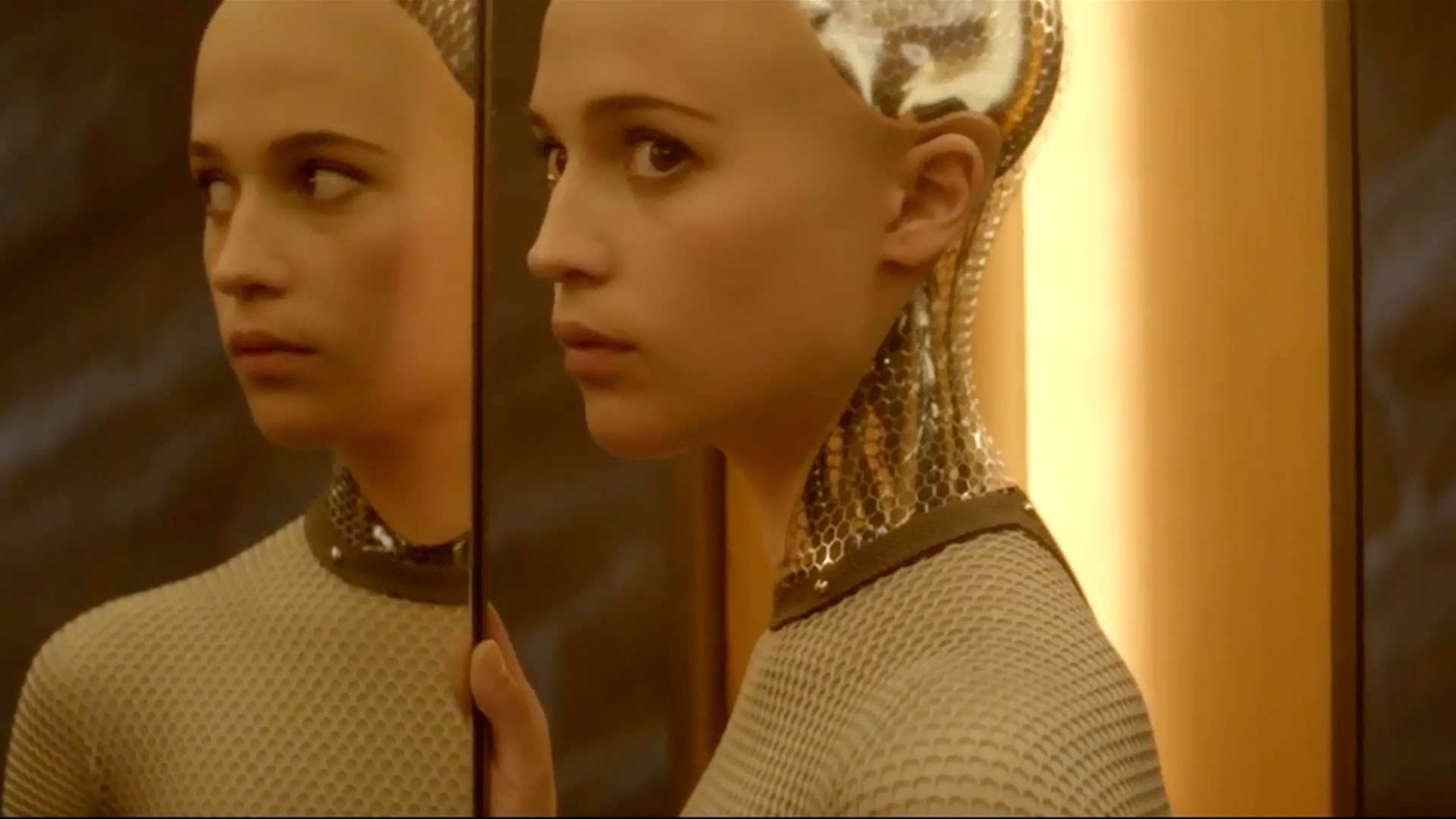
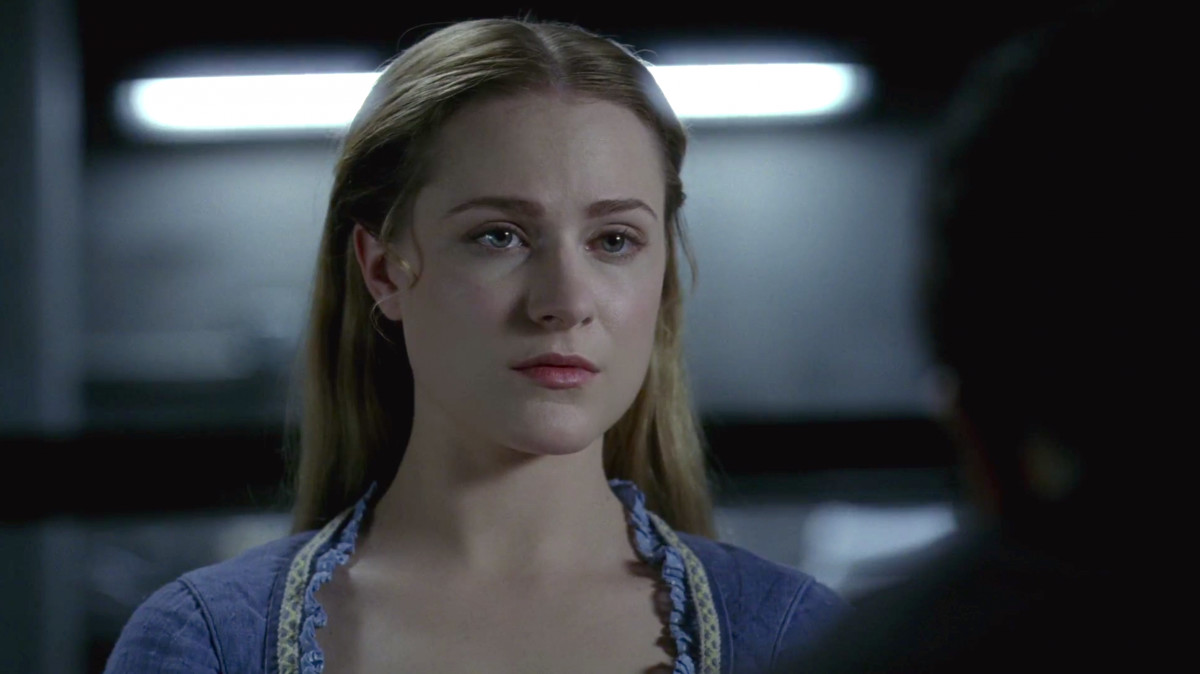
Green doesn’t pass the Turing Test, but it’s not hard to imagine a computer that would. In Westworld, Ford mentions that the hosts passed the Turing Test within the first year. C3PO, the synthetics from Alien, the cylons from Battlestar Galactica – all would pass the Turing Test with flying colours. Indeed, the creator of Ava from Ex Machina was so convinced she’d pass a Turing Test that he had the interrogator test her knowing that she was a machine:
Caleb: …in the Turing Test, the machine should be hidden from the examiner. And there’s a control, or –
Nathan: I think we’re past that. If I hid Ava from you, so you just heard her voice, she would pass for human. The real test is to show you she is a robot. Then see if you still feel she has consciousness.
After all, even if something passes the Turing Test, is that enough? Is the bar in the right place? Does passing the test necessarily mean you have a mind? Let us know your thoughts on twitter or via the comments, and we'll delve deeper into those questions in Part 2.
Footnotes
[1] E. J. Lowe, An Introduction to the Philosophy of Mind, (Cambridge: CUP, 2000) p. 193.
[2]Indeed, the Turing Test has become shorthand for any language-based test to distinguish humans from machines. We’ll go through some of our favourites in an upcoming piece.
[3]Alan Turing, Computing machinery and intelligence, Mind Vol. 59 No. 236 (1950), pp. 433-434.
[5]A potentially worrying implication of this, of course, is that we mightn’t have a way of assuring ourselves that anyone else has a mind, human or machine. This is the problem of other minds.
References
Lowe, E. J. An Introduction to the Philosophy of Mind, Cambridge: CUP, 2000.
Turing, A. Computing machinery and intelligence, Mind Vol. 59 No. 236, 1950, pp. 433-461.
]]>
0The Doctorhttp://www.stephrennick.com<![CDATA[On Persistence & Memory]]>https://www.epicureancure.com/?p=4792017-08-11T20:47:42Z2017-03-17T18:00:13ZWhat makes you, you? What could be changed or removed and still leave the ‘youness’ intact? More specifically, what is required for you to persist: to be the same person tomorrow as you were yesterday?
Fiction and philosophy alike have offered various ways to answer this question. They tend to approach the problem in similar fashion as well: they ask us to entertain some pretty strange hypotheticals – be they thought experiments or fictional scenarios (what’s the difference, really?) – and then see what intuitions fall out.
One of the classic personal identity thought experiments is called Theseus’s Ship. It goes like this:
Over a period of years, in the course of maintenance a ship has its planks replaced one by one – call this ship A. However, the old planks are retained and themselves reconstituted into a ship – call this ship B. At the end of the process there are two ships. Which is the original ship of Theseus?[1]
People differ in their response: some think ship A – after all, it’d be the one they’d insured – and others think ship B (including those looking for forensic evidence of the bloody murder you committed before deciding to overhaul your ship). Some think there isn’t a clear answer one way or the other, or that they’re both the original ship (whatever that means).
We find variants of Theseus’s Ship throughout our fiction. In the Doctor Who episode Deep Breath, the Twelfth Doctor asks,
If you have a broom, you replace the handle, and then you replace the brush, and do it over and over, is it still the same broom?
(We might, of course, ask the same question of the Doctor).
And in Westworld (which is full of interesting musings about identity, but here’s just a small example) we hear of Dolores:
You know why she's special?
She's been repaired so many times, she's practically brand-new.
Don't let that fool you. She's the oldest host in the park.
Westworld, S01E01
I am inclined to think that Dolores continues to be Dolores, despite her modifications and repairs. Likewise, I can accept that each incarnation of the Doctor is, in some sense, the same continuing Time Lord (your intuitions might differ from mine – in which case, tell me in the comments!). Perhaps the Ship of Theseus example is extra tricky because there are two ships: if the old planks had been left to rot, rather than reassembled, maybe our intuitions would be clearer.
Many people would write off these questions as idle speculation: a matter best left for sci-fi, or philosophers in their ivory towers. But I am confident that you, dear reader, know better. After all, your cells die and are replaced. Your thoughts change – you’ve gained and lost memories over time, changed your convictions, developed your dispositions. The planks that make up you are no more permanent than those in Theseus’s Ship. So what is it that enables you to persist, despite the changes you’ve undergone, from one day to the next?
“If you have a broom, you replace the handle, and then you replace the brush, and do it over and over, is it still the same broom?”
Material Continuity
We might answer the persistence question in terms of material continuity:
You are that past or future being that has your body, or that is the same biological organism as you are, or the like.[2]
That body can undergo change, but so long as there is some physical continuity between the different stages of you – baby, toddler, misunderstood teen etc. – there is persistence. In fiction we’re willing to believe that a person can undergo a great deal of change and persist. Upon seeing Hermione’s failed Polyjuice Potion transformation in Chamber of Secrets, did you stop, in outrage, and exclaim ‘Oh my god they’ve killed Hermione! A giant cat-person has taken her place!’
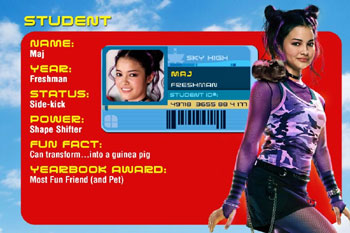
Of course you didn’t. Just like you don’t worry that Bruce Banner has died when the Hulk appears, or that Jacob has ceased to be when he leaps into wolf-form. And remember that kid from Sky High who could turn into a guinea pig?
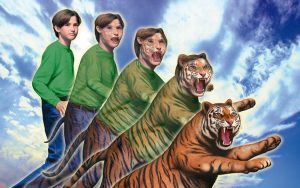
The whole premise of Animorphs is that people can drastically change their bodies and yet remain fundamentally the same person. The body can change a great deal – indeed, undergo full metamorphosis[3] – and yet we’re still willing to believe the person remains intact.
That’s not always the case though – sometimes we can go too far. You might believe that your BFF has turned into a beetle, a werewolf, or a luminescent green beefcake, but you mightn’t be so optimistic about their continued existence if they had been transformed into a tea cosy.[4]
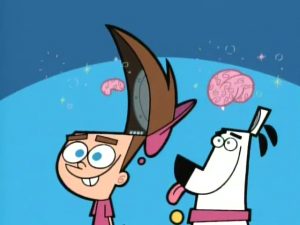
In fictional worlds without magic – including, perhaps, the world we live in – the brain is often the limit. We can survive losing a few limbs, organs, even everything below the neck, but it’s the brain that makes us who we are. Thus we can make sense of brain swap stories, where characters wake up in new bodies.
But is the brain really the limit?
Psychological Continuity
In more recent fiction, the brain swap has been superseded by the brain scan, where it isn’t the brain meat that matters (the hardware) but rather the mental content (the software), frequently thought to include memories, beliefs, desires and so forth – all the stuff thought to make up our personality. There are both sci-fi and fantasy variants of this idea: the brain upload/download in the former case – think the baddies in The Sixth Day, the avatars in, well, Avatar, or the Cylons in Battlestar Galactica – and the Freaky Friday flip in the latter.
What exactly is required for persistence – even of the psychological variety – differs between accounts, both fictional and philosophical. One common but contentious possibility is memory. A particularly pervasive trope is the Quest for Identity, which occurs when a character
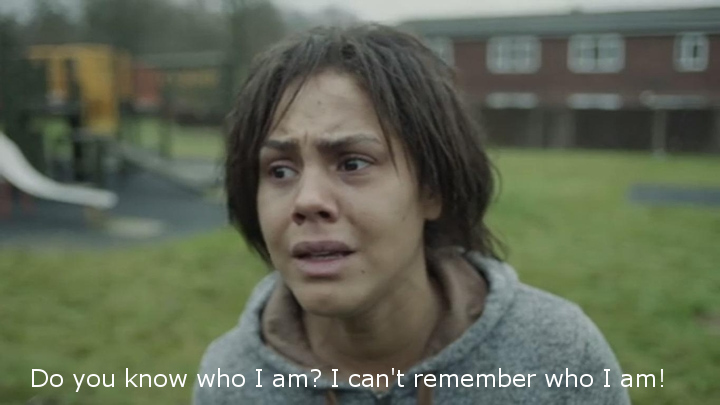
wakes up stranded in the middle of nowhere, with no recollection of who he is. The plot involves, at least in part, his efforts to discover the identity he cannot remember.[5]
We are used to characters exclaiming, ‘I can’t remember who I am!’
See? But there is a difference between knowing who you are and being the same person over time: the former is an epistemic matter and the latter a metaphysical one. When thinking about persistence, it is the latter that we should have in mind.
Here are two strikingly different takes on the importance of memory for identity:
In the film version of Allegiant (which proved, if nothing else, that sometimes it’s better to write just one book rather than making everything a trilogy), Four discovers that some children are going to have their memories wiped. He is horrified by this, and pleads,
If you take away what they know, you take away who they are.
When the Dollhouse’s madam Adelle Dewitt discovers Echo poking about some files, she says:
This is Caroline. Minus the memories, but it’s her and this is exactly what Caroline would do.
In the first case, memory maketh the man (or small child). Consistency in memory is crucial for persistence. That’s not to say that all of our memories must remain intact – that would be such a high bar to meet that Heraclitus (and Pocahontas) would have been right in their insistence that we can’t step in the same river twice…
… not just because the river has changed, but because we have too. None of us would persist for very long at all.
Instead, what is commonly thought to be required is some sort of continuity. Memory is a bit like a rope: not one continuous thread, but a series of short overlapping fibres wound together. My ten-year-old self remembered the antics of five-year-old me, my fifteen-year-old self the angst of ten-year-old me, and so on. If we suddenly underwent a total memory wipe, then, according to at least some views of persistence, we’d no longer be the same person.[6]
“If you take away what they know, you take away who they are.”
In the Dollhouse case, by contrast, what matters is still psychological – Adelle doesn’t think that the blank-slate dolls are their former selves in any meaningful way, so bodily continuity isn’t enough – but something other than memory: dispositions, perhaps, or some feature of personality that guides behaviour at an instinctive level.
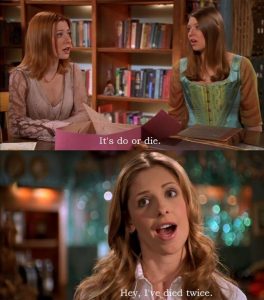
In consuming fiction, we seem to adapt to whatever account of persistence the text throws at us: Wolverine loses his memories but keeps his claws, astonishing muscles, and aggression; Lindsay Lohan loses her entire body in Freaky Friday, but is still easily embarrassed by her mum; Buffy remains Buffy despite coming back from the dead. Twice.
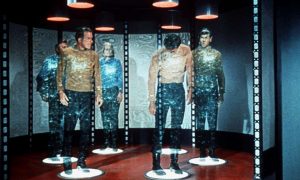
But finding the right answer to the persistence question matters, not only because it’s nice to know what sort of things make us ‘us’, but also because with new technological developments we might need to make tough decisions about what counts as surviving: if my brain is transplanted into another body, do I – the very same me – wake up in their skin? If I am vaporized in a teleporter in true ‘Beam me up, Scotty!’ fashion and then reconstructed at the other end, do I survive the trip? If time travel involves disappearing at one time and instantaneously (from the perspective of the voyager) reappearing at another, can we be sure the time traveller is the same person? A time turner is a much scarier prospect if in using it I cease to exist.
And if all of this seems far-fetched, then think about the more mundane, but hugely significant, ramifications persistence has for punishment and praise: what sense does it make to punish someone for a wrong they committed two weeks, years, or decades ago, if we can’t be sure they are the same person today? Is there any point to praising someone for the good they’ve done, or encouraging them to pursue such acts in future? We think that people do persist, at least some of the time, and perhaps that’s true... but if we’re going to be justified in attributing blame or credit, we better figure out how, and under what circumstances.
What other interesting personal identity examples can you find in the games you play, books you read, or shows you watch? Let me know in the comments, or on facebook/tumblr/twitter.
Footnotes
[1] Michael Clark, Paradoxes from A-Z, Second Edition (London: Routledge, 2007). Adapted from Hobbes, De Corpore Part 2, Chapter 11, section 7.
[2] Eric T. Olson, Personal Identity, Stanford Encyclopedia of Philosophy (2016 Edition). https://plato.stanford.edu/archives/spr2016/entries/identity-personal/
[3]The Trope Namer is Kafka's 1915 Novella Metamorphosis. Spoiler: contains a beetle.
[4] Petrification is a common type of transformation where one’s survival is questioned – take the sun-drenched trolls in The Hobbit, or the victims of Medusa. A related trope occurs where characters are frozen or petrified, and then shattered.
[6] Oh you’ve scrolled down to the footnote! Well done you! Let me take the opportunity to encourage you to watch the anime Ergo Proxy. It’s great, trippy, and deals with memory in interesting ways. Off you go!
References
Clark, M. Paradoxes from A-Z, Second Edition, London: Routledge, 2007.
Olson, E.T. Personal Identity, Stanford Encyclopedia of Philosophy, 2016 Edition. https://plato.stanford.edu/archives/spr2016/entries/identity-personal/
Further Reading
If you're interested in the teleportation cases or psychological continuity, see Derek Parfit's Reasons and Persons, especially Chapters 10 and 12.
]]>0The Doctorhttp://www.stephrennick.com<![CDATA[Trope Alert: The Supernatural Detective]]>https://www.epicureancure.com/?p=4592017-08-11T20:45:20Z2017-03-10T18:39:20ZYou’ve got super powers. You’ve been bitten by a vampire, turned into a werewolf, woken up a zombie. But hey, you’ve still got to make a living. What are you going to do?
Become a detective. Because obviously.
There’s an uncanny number of private eyes with a dark background. And it’s frequently justified – these are characters who are up all hours, have connections to the underworld, and the ability to sneak or spy better than the average mortal. But rather than undertaking corporate espionage, writing crime novels, or planning weddings, they don a trilby, defeat the flim-flammer, and save a dame.
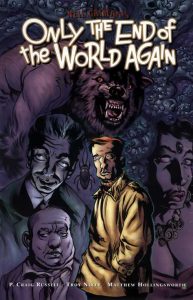
Unsurprisingly, there are already a host of identified detective-related tropes. Today, though, we introduce a new one: The Supernatural Detective. The Supernatural Detective is different from the Occult Detective, who investigates the paranormal but may not be supernatural themselves…
…but there is, as one might expect, some overlap (the more-than-human often encounter others like them).[1] It includes, but is not limited to, the Vampire Detective Series. The Supernatural Detective is perhaps best understood as a subset of the Exotic Detective, where their unusual trait is specifically some supernatural characteristic. The crimes they solve may be mundane or mystical.
An illustrative sample follows. Let us know your favourites, including those we haven’t mentioned, in the comments or on twitter/facebook/tumblr.
The Vampire Detective
As noted above, vampire detectives have a trope of their own:
[T]his might be because vampires fit so easily into the Film Noir Private Detective with their tendency to be out at night, tendency to wear long coats, messy backstories, inevitable love difficulties, not-so-clean morality, and in some sense of the word, a drinking problem.[2]
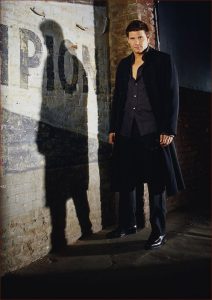
Angel is the television exemplar – broody, dark, giving up the love of his undead existence, and in aesthetically film noir fashion (at least in season 1), using his powers to solve crime.
The Werewolf Detective
Need flexible working hours because you turn into a ravening monster at the full moon? No worries: become a detective. Larry Talbot – aka The Wolf Man – does just that in Neil Gaiman’s short stories Only the End of the World Again and Bay Wolf (an adaptation of Beowulf, as the name suggests).
The Superhero Detective
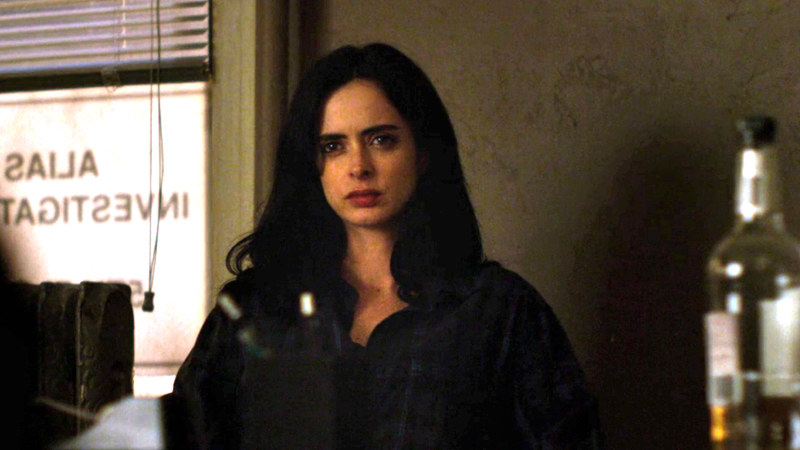
Although frequently male, the Supernatural Detective is not bound to a single gender. In both the comics and recent Netflix series, Jessica Jones – former superhero, with superhuman strength (and, in the comics at least, ability to fly) – works as a private investigator.
And she’s not the only one. Marvel’s Jamie Madrox works as a PI in New York along with Wolfsbane and Strong Guy.
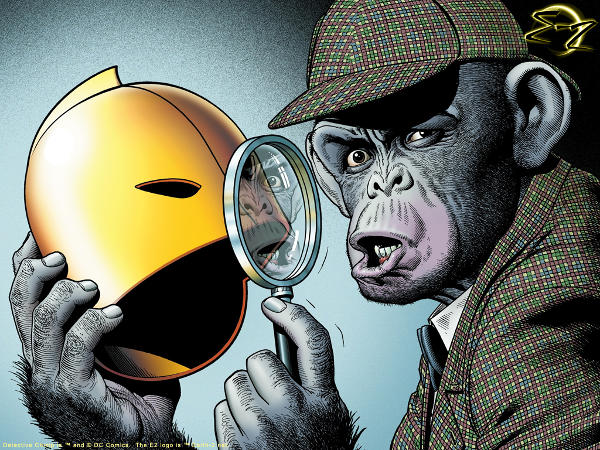
But perhaps best of all, DC’s Detective Chimp solves crimes while wearing a Sherlock Holmes-style deerstalker hat, frequently assisted by the Bureau of Amplified Animals, including Rex the Wonder Dog. This stuff writes itself.
The Lord of Hell Detective
You’d think we were making it up, but no, even Lucifer gets a turn as a gumshoe. Based on Lucifer Morningstar from Sandman, and appearing in Vertigo’s Lucifer, the eponymous TV show follows the fallen angel as he “decides to help the LAPD Detective Chloe Decker solve homicides for his own amusement.”[3]
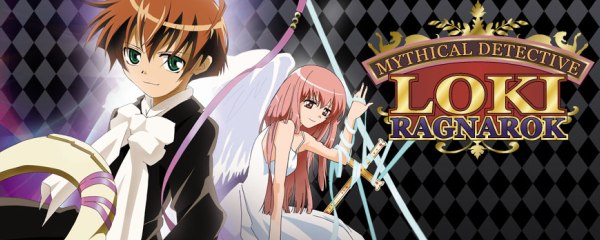
Lucifer isn’t the only divine being to get caught up in the PI business – in the manga (and anime adaptation) The Mythical Detective Loki Ragnarok, the Norse trickster opens the Enjyaku Detective Agency to investigate the paranormal (and y’know, collect evil auras that take over human hearts in order to return to Asgard. It’s important to have hobbies).
The Zombie Detective
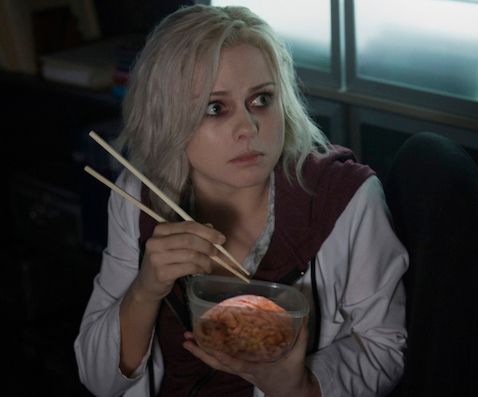
In iZombie, the central character finds work at a morgue for a steady source of brains. ‘But that doesn’t sound like detective work!’, you exclaim.
Suspend your disbelief, dear reader:
Whenever Liv eats a dead person's brain, she temporarily inherits some of their personality traits and experiences flashbacks of their life. Those visions are generally triggered by sights (events or objects) or sounds (repeated sentences). In the case of murder victims, the flashbacks offer clues about their killers. Liv uses this new ability to help Police Detective Clive Babineaux solve the crimes, passing herself off as a psychic…[4]
A pseudo-psychic zombie two-for-one! Take that Simon Baker!
(Also, here’s a fun fact: The Walking Dead was almost a zombie detective show – but with zombie crimes, rather than zombie detectives. The Master notes that, having recently reached Series 4, he “would not have made it that far through a Zombie detective series.”)
The Extra Lucky Detective
I was originally going to call this section ‘The Magical Detective’. After all, it would be strange to have even one example to put under such a specific heading, but to my surprise, here are two:
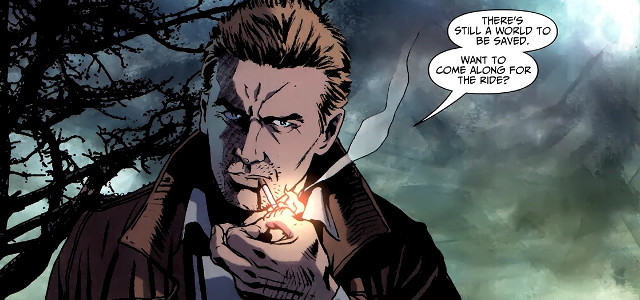
John Constantine of DC Comics fame (played by Keanu in the movie) has a range of magical powers including “synchronicity wave travelling… an instinctual supernatural ability for Constantine to make his own luck.”[5] Like Angel and Loki, he overlaps with the Occult Detective.
More recently, Stan Lee’s The Lucky Man has appeared on television, starring a homicide detective that can ‘control luck’ thanks to an ancient magical bracelet….
I guess the FFX-2 Lady Luck suits weren’t available. Shame – he would’ve looked dashing.
So that’s it for our first serving of pop(culture)corn – I hope it proved a tasty morsel. Know of any other examples, or alternative employment opportunities for the charmed/cursed/divine? Tell us in the comments, or on facebook/twitter/tumblr.
]]>2The Doctorhttp://www.stephrennick.com<![CDATA[Catherine Sangster, On Dictionaries, Pronunciation, and Geekery (Part 3)]]>https://www.epicureancure.com/?p=4192017-08-11T21:24:42Z2017-02-26T22:56:52ZCatherine Sangster is Head of Pronunciation for Oxford Dictionaries. Before moving into lexicography, she spent nine years in the BBC Pronunciation Unit, and completed a DPhil in sociolinguistics. Catherine's research interests include language and gender/sexuality, feminism, accents and dialects, Latin, Germanic languages, and the phonology of conlangs. In this final instalment, we discuss how dictionaries can be subversive, the connection between academia and fandom, and texts that do interesting things with language. You can find out more at Oxford Words, or keep up with Oxford Dictionaries on twitter @OxfordWords and @OED.
TD: So, given that you can have multiple pronunciations of a word, and presumably multiple meanings of a word, is the continued existence of dictionaries – whether paper or digital – threatened by internet enterprises like Wiktionary or even the Urban Dictionary?
CS: Dictionaries basically are becoming an online thing. The Oxford English Dictionary is an online entity; it does of course also exist in physical form, but in terms of the updates that happen to it, and the way that most people work with it and use it, it’s an online thing. Now the ones you mentioned are crowd-sourced. If they’re not the sort of sites that scrape dictionary content and then present it, a lot of them are crowd sourced. I think that contemporary dictionary producers are interested in crowd sourcing, but that there’s a value to expert editorial input to weigh things and to make sure that there’s a balance, and people aren’t creating things the way they wish they were, rather than the way things actually are.
TD: That makes sense. Again, this is from the linguist, so do forgive me. Can dictionaries ever be subversive?
CS: I’d say lexicographers can certainly be subversive, yeah! There’s not a lot of scope for subversion in the pronunciation part of a dictionary entry, although probably not none; the decision for instance to include the northern ‘A’ (bath, glass) [rhyming with ass, not arse] forms subverted the norm of giving only the close RP versions.
In parts of the dictionary that aren’t my specialism I’m wary of speaking for my colleagues too much, but say you have a dictionary entry. As well as the pronunciation, part of speech, definition, and the etymology, you’d have some quotations or example sentences.
CS: Those are drawn from massive corpora of real data –we don’t make them up, they just exist in the world and an editor picks a few to illustrate exactly how the word might be used. Now if you’re picking three from a hundred, in exercising that choice you might subvert people’s expectations. For instance if it were a word that was particularly associated with one sort of thing you might – and you’d do it partly for lexicographical reasons because you want to demonstrate the range – pick one that would surprise or upset expectations.
I invited my colleague Fiona McPherson to weigh in on this, she says:
The main purpose in selecting the quotation evidence is, course, to reflect the way the term you are defining is used. I’m looking for apt, clear examples which help the reader to understand, rather than baffle them – otherwise I’m not doing my job. In saying that, it is the one area where we can get a little creative. All other things being equal, I do get a kick out of choosing an example from one of my favourite books, or perhaps one that shows my football team in a good light. I do also enjoy choosing a publication that is more unusual – maybe something that is less canonical than those which spring to mind when you think of the OED. Working as I do with new words, you often get that opportunity as those publications tend to be where that type of vocabulary is found. But that is only possible if the quotation is one which aids understanding. That always has to be the main objective.
TD: How would you explain the concept of a dictionary to an alien?
CS: Well, what’s the alien’s language? Does the alien have language in the way we understand it?
TD: Yes, let’s assume that there is some way to actually communicate with the alien.
CS: Okay. I’m going to restrict myself to talking about the pronunciation bits of the dictionary.
TD: Fair enough.
CS: Assuming the alien had some language, and that their language was produced physiologically by some part of their alien anatomy, I would say: these symbols here, the transcription symbols, are just a sequential indication of which bit of your anatomy – which bit of alien anatomy – interacts with which other bit of alien anatomy, to produce the sound which combines to make the language.
TD: That’s an excellent description!
[CS laughs]
TD: And probably helpful to non-aliens as well to be honest [laughs]. If you could bring any obsolete item of lexis back into popular use, what would it be?
CS: Oooh. One of the nice things about OED is that nothing gets removed. There are a lot of entries in OED which are obsolete, but they won’t be expunged or deleted. I come across words a lot, actually, as I’m working through, and I think ‘oh that’s ripe for coming back’.
TD: Linguistics questions aside, a couple of quick ones to end with. You mentioned you have a doctorate in sociophonetics, and obviously you have various academic interests. What role do you think academics can or should play in the production or consumption of geek culture?
CS: I was thinking about this recently, because I was looking at the term aca-fan. Often people are very keen to draw distinctions, you know, ‘it’s not the same as being someone who is simultaneously a fan of something and an academic’. I don’t think there should be an artificial distinction; I don’t think that academics fundamentally think about things in a different way. We might give ourselves more space to pick things apart, or we might bring particular frameworks of thinking about something to bear on whatever our particular fandom might be, but I see it as organically belonging together. And I think really anybody can analyse, if you listen to people geeking out – so, I enjoy tabletop games, I enjoy comics books, I enjoy Buffy and various…
TD: Anyone who doesn’t enjoy Buffy I don’t trust [she says, tongue in cheek].
CS: Well thinking about Buffy as an example, I’ve watched Buffy for many years and talked about Buffy with many people, friends who are academics and not, including people who were academically working on Buffy and not, and I don’t see a fundamental difference. You can pull it apart on gender lines, you can see things on a subsequent watching you hadn’t seen before, and that might be informed by your academic work or your readings or but those aren’t things that are locked up in the ivory tower especially, or they shouldn’t be.
TD: That’s a great answer. One of the things we do on the site quite a lot is talk about tropes. Do you have a favourite trope?
CS: Tropes are one of the things that feed a lot of the potential new additions to the dictionary in the areas I look at. Often they’re fairly niche and specific, and so they might not make it over the hurdle to get included. Something like 'Mary Sue' for instance as a trope, or 'Sexy Lamp Test' is certainly something that we’re looking at. I was trying to pin down a definition of Strong Female Character recently – the thing with tropes is that they’re really slippery. You know exactly what you mean by them, but they can be hard to nail down. I don’t think I have a favourite one; I’m very interested in them, and it’s fun to spot them, but I don’t think there’s a particular one that’s my favourite one of all.
TD: Are there any that you would like to stop seeing?
CS: Oh plenty! I’m trying to think of things I’ve watched recently.
TD: I know as soon as one puts that hat on then it’s just easy to get ragey about all the many things that they should really stop doing…
CS: When I think about tropes that really annoy me, it often boils down to limitations placed on female characters, of one sort of another.
TD: Agreed. Finally, do you have any recommendations for our readers: films to watch, TV series you’ve loved, books to read, or other recommendations?
CS: Oooh. I’ll pick ones that do interesting things with language…
TD: That would be great.
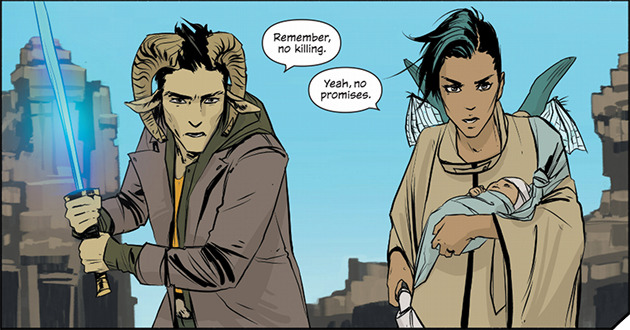
CS: Ok, a comic book – I’m sure many of your readers will already be familiar with it, but Brian Vaughan and Fiona Staples’ Saga series does really interesting things with language. It uses an existing invented language for one of its languages – Esperanto – and I’m very interested how languages get used in graphic novels in different ways. So yeah, Saga would be one.
I wouldn’t say I’d wholeheartedly recommend it for various reasons, but there’s lot of interesting language stuff in Game of Thrones, and I do enjoy watching it, and problematising it as we academics love to.
I enjoy the Marvel Cinematic Universe in general, and there are some cool language things that go on for instance in Captain America: Civil War. I mentioned Scarlet Witch already, but also Zemo, Bucky and of course Black Panther with the Xhosa. I spoke about some of that at Nine Worlds this year. Agents of SHIELD has some nice language and translation bits too.
I’m trying to think if there are any board games with really good pronunciation dimensions to them but not among the ones I love, really. Although the word ‘meeple’ – which is a little character figure from a board game – is finding its way into the dictionary.
TD: Oh that’s cool.
CS: Well we’re seeing what we can do.
TD: Thank you very much for a really interesting chat!
CS: Thank you!
NB. This interview has been edited for clarity.
This is the third in a series of interviews with authors, developers, critics, journalists, and academics. If you'd like to make a suggestion, or be interviewed, do get in touch.
]]>0The Doctorhttp://www.stephrennick.com<![CDATA[Sherlocked in Samarra]]>http://www.epicureancure.com/?p=3652017-08-11T20:38:05Z2017-02-14T16:58:36ZThere has been a lot of talk about The Six Thatchers – opening episode of Sherlock season four: disappointment, glee, parallels drawn to a certain besuited agent with a license to kill. Gatiss even wrote a poem. But there is one part of the episode that hasn’t received attention, and it’s about time it did (never fear, I’ll avoid spoilers – at least until the end).
Near the beginning of The Six Thatchers, Sherlock tells a story. It’s a retelling, in fact, of W. Somerset Maugham’s own retelling of an old Arab fable. Maugham’s version goes like this:
There was a merchant in Baghdad who sent his servant to market to buy provisions and in a little while the servant came back, white and trembling, and said, Master, just now when I was in the market-place I was jostled by a woman in the crowd and when I turned I saw it was Death that jostled me. She looked at me and made a threatening gesture; now, lend me your horse, and I will ride away from this city and avoid my fate. I will go to Samarra and there Death will not find me. The merchant lent him his horse, and the servant mounted it, and he dug his spurs in its flanks, and as fast as the horse could gallop he went. The merchant went down to the market-place and he saw me standing in the crowd, and he came to me and said, “Why did you make a threatening gesture to my servant when you saw him this morning?” “That was not a threatening gesture”, I said, “it was only a start of surprise. I was astonished to see him in Baghdad, for I had an appointment with him tonight in Samarra.”[1]
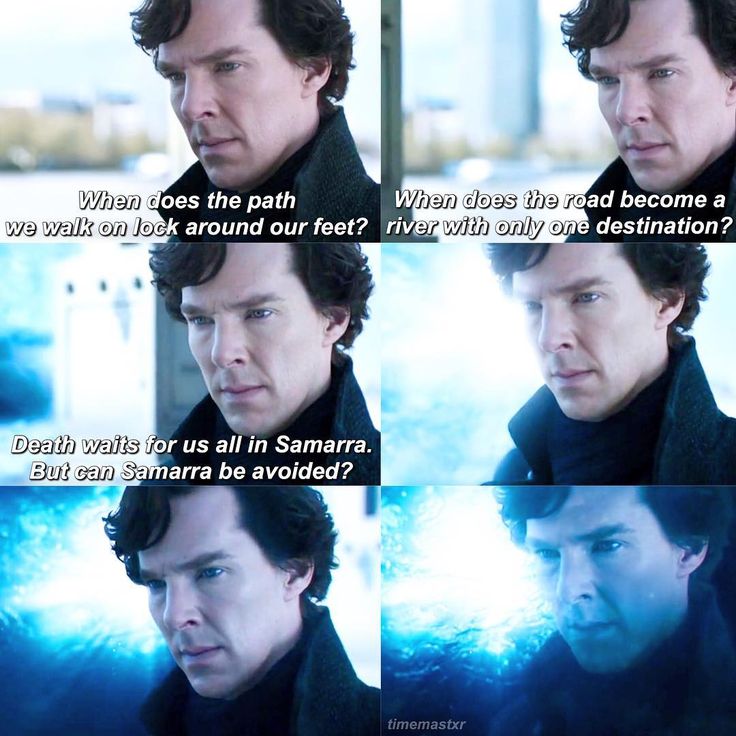
Commonly this tale is cited as an exemplar of fatalism: no matter what the servant does, it seems, death will find him. Inevitable, predestined – two words that the Holmes brothers use in their discussion of the tale. The villain of the episode references it too:
“I’m just like the merchant in the story, I thought I could out-run the inevitable. I’ve always been looking over my shoulder, always expecting to see the grim figure of… Death.”
But it’s not that the servant is doomed to be taken that evening no matter what he does; he is doomed because of what he does. He sees Death, believes he’s in trouble, and acts on that belief – his death is the result. We might think that if he had not been so certain – or if his Master had refused to lend the horse, or he’d been slower on the road – his fate may have been different.
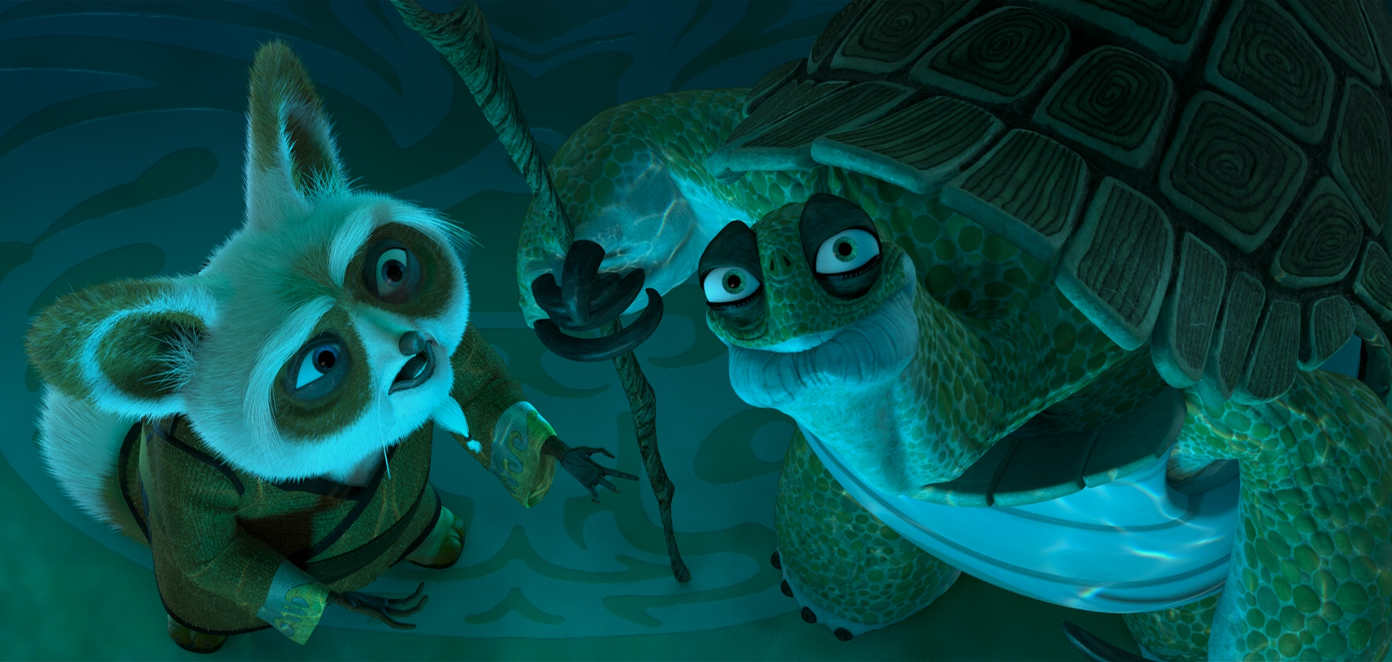
This isn’t unusual in fiction: characters giving weight to a prophecy is often what makes it come true. In Kung Fu Panda, Master Oogway has a vision in which the villainous Tai Lung escapes from his prison. To prevent the vision coming true, Shifu sends a bird to the prison to increase security, thereby providing Tai Lung with the means of escape: a feather for a lock pick. It’s not that Tai Lung’s escape was inevitable, although we might feel fatalistic were we in Shifu’s shoes (well, closed-toe sandals). (There's more to say here, but we’ll investigate other common features of self-fulfilling prophecies in a future instalment.)
Throughout The Six Thatchers we return to the story of the servant in Samarra. We learn from Mycroft that Sherlock doesn’t put much stock in the fatalistic conclusion:
M: You always hated that story as a child. Less keen on predestination back then.
S: I’m not sure I like it now.
M: You wrote your own version, as I remember. Appointment In Sumatra. The merchant goes to a different city and is perfectly fine.
S: Goodnight Mycroft.
M: Then he becomes a pirate, for some reason.
(Vague hints that might constitute a spoiler follow)
I’m on the side of young Sherlock – Samarra was a choice, not an inevitability. To deny this cheapens the very important choice made at the climax of the episode, and the character who made it, riding to Samarra with eyes wide open.
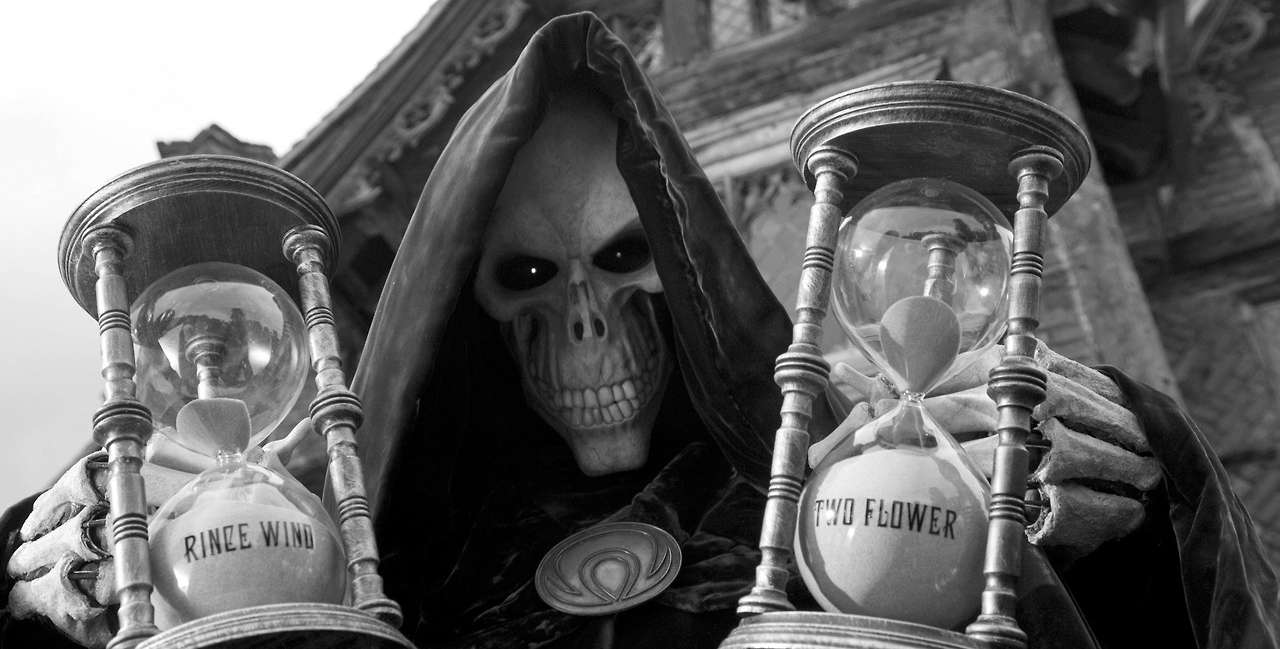
There’s a sense in which we all get to Samarra eventually, of course. But until then I’m with Rincewind from Terry Pratchett’s The Colour of Magic, who, upon being told by Death that he’s expected soon in Psephopololis, simply declines to be there:
“But that’s five hundred miles away!’
YOU DON’T HAVE TO TELL ME, THE WHOLE SYSTEM’S GOT SCREWED UP AGAIN, I CAN SEE THAT. LOOK, THERE’S NO CHANCE OF YOU-?
Rincewind backed away, hands spread protectively in front of him…
‘Not a chance!’
I COULD LEND YOU A VERY FAST HORSE.
‘No!’
IT WON’T HURT A BIT.
‘No!’ Rincewind turned and ran. Death watched him go, and shrugged bitterly.”[2]
Footnotes
[1]W. Somerset Maugham, “An Appointment in Samarra” from Sheppey (1933)
[2] Terry Pratchett, The Colour of Magic, (London: Transworld, 1983), pp. 77-78
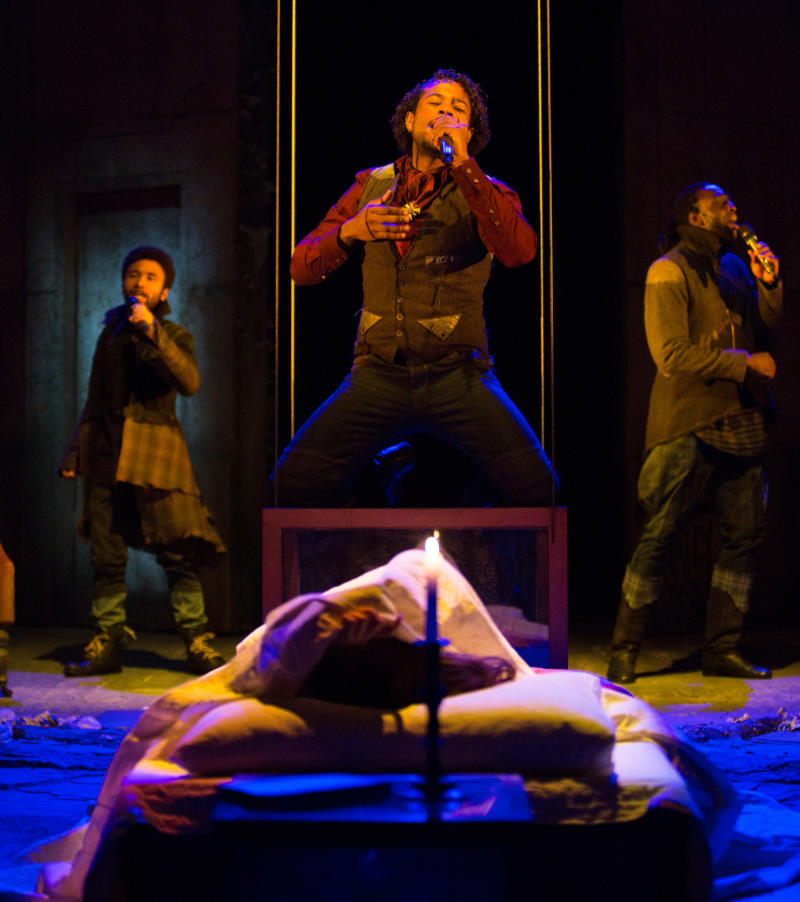
]]>0The Doctorhttp://www.stephrennick.com<![CDATA[Royal Shakespeare Company, Cymbeline]]>http://www.epicureancure.com/?p=3542017-08-11T20:36:51Z2016-11-23T22:45:23ZSome time ago I started to write a piece on Neil Gaiman’s The View from the Cheap Seats. It began:
I don’t write reviews, and I don’t read non-fiction. Neither of these things are strictly true, of course: this is a review of sorts. And philosophy is, at least occasionally, non-fiction.
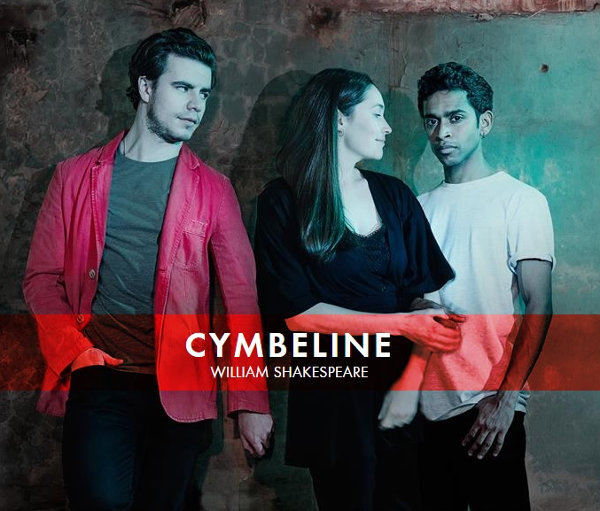
I still mean to finish it, once I get my thoughts in order about fiction, truth, and the relation between the two. In the meantime, here’s another not-quite-a-review, or at least very-partial-rather-short-and-only-focussing-on-specific-details-review. It concerns the Royal Shakespeare Company’s (RSC) Cymbeline, which is running in London for another few weeks, and which I heartily recommend you see, if you can.
Cymbeline is one of Shakespeare’s weirder plays. The RSC describe it as the “rarely performed romance of power, jealousy, and a journey of love and reconciliation.”[1] Depending on who you ask, it’s billed as a tragedy, a romance, or a comedy. It’s all three, in its way.
The original is set in Ancient Britain, with the latter ruled by the eponymous Celtic King, vassal of the Roman Empire. The RSC’s version turns this on its head, setting the events in a dystopian near-future, and casting women in many of the originally male roles. If you’re not familiar with the play going in you mightn’t notice – it just works. These aren’t merely cross-cast roles: that is, it’s not that female actors are playing male characters. Rather the characters themselves have been genderflipped, a male heir becomes a female heir, a male servant a female servant, and so on (think Katee Sackhoff’s Starbuck in the new Battlestar Galactica, rather than Margaret Cho’s Kim Jong-il in 30 Rock). Most striking is the gender flip of Cymbeline – now Queen of Britain – and the formerly wicked stepmother, now the Duke.
This choice subverts our expectations, and calls into question the tropes we take for granted. As director Melly Still puts it:
I love wicked stepmothers in fairy tales. But Cymbeline is more than a fairy tale – it’s a thriller, epic and mythic. Hopefully this interpretation of the Queen as the Duke allows us to focus on his actions rather than his type. It sharpens the audience’s eyes to who he is: this is a man who is obsessively power hungry and loves his son beyond reason.[2]
Cymbeline’s ability to rule does not derive from masculinity, and the Duke’s villainy isn’t reduced to the plotting of a power-hungry woman. The audience is confronted with characters, not merely stereotypes.
The play is brutal, bizarre, and in unexpected moments, laugh-out-loud funny (with the addition of musical numbers an unexpected delight).[3] You can find more information (including an actual plot synopsis, which I’m told is a staple of most reviews), on the official RSC site.
Footnotes
[1] RSC, “About the play” https://www.rsc.org.uk/cymbeline/about-the-play.
[3] In particular, Marcus Griffiths was hilarious as Cloten, Oliver Johnstone wonderfully despicable as Iachimo, and Natalie Simpson a standout as Guideria.